Choosing what fabric is best for sweaters depends on warmth, softness, durability, care, and personal comfort. A thick winter pullover needs different qualities from a lightweight office cardigan. The same fiber can also feel different after spinning, blending, and finishing.
Stuart McCullough, former managing director of The Woolmark Company, described wool as “a natural, renewable and biodegradable fibre.” That statement explains wool’s strong position in knitwear. Merino wool offers warmth with breathable comfort. Cashmere feels exceptionally soft but needs careful handling. Alpaca provides warmth and a distinctive halo. Cotton feels familiar and works well in mild weather. Linen adds coolness and texture, although it can wrinkle easily. Acrylic costs less and resists moth damage, but it may trap heat and develop pilling. Blended fabrics often balance these weaknesses.
There is no perfect winner.
This guide compares the top seven sweater materials through practical details. You will see how each fabric behaves against the skin, after washing, and during repeated wear. A merino sweater may feel warm on a windy morning. A cotton knit may feel better in a heated room. Cashmere can look luxurious, yet careless washing may quickly change its shape.
I still hesitate to name one universal champion. Fiber quality, yarn construction, garment density, and finishing can matter as much as the label. Even personal sensitivity changes the answer. Use this comparison to identify what fabric is best for sweaters in your climate, routine, and budget. The most expensive option is not automatically the most suitable.
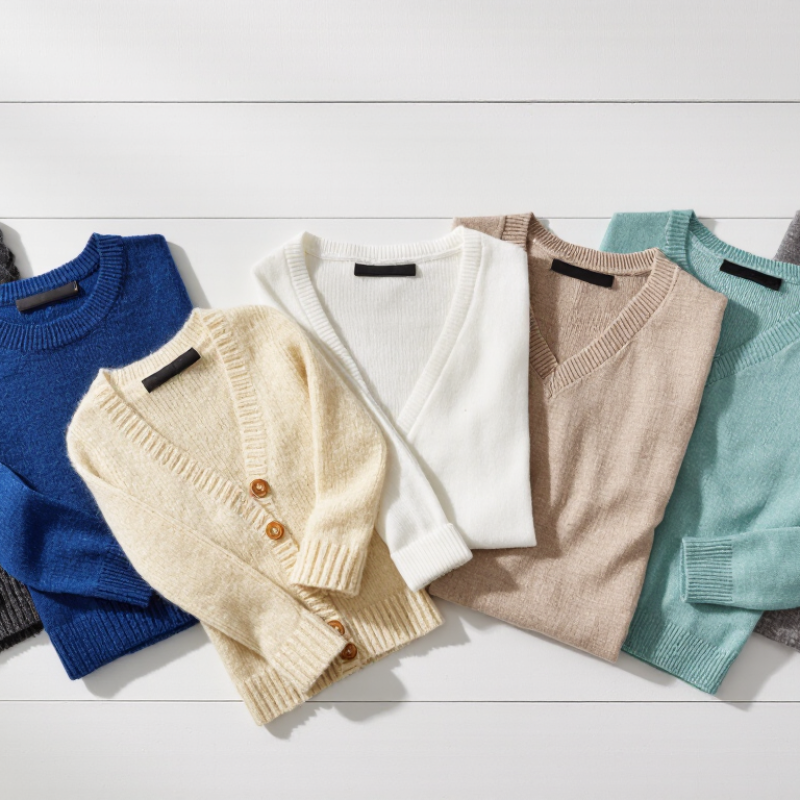
What makes a fabric suitable for sweaters? The answer is not softness alone. A good sweater fabric balances warmth, breathability, stretch, strength, and care requirements. It should feel comfortable against skin, while holding its shape after repeated wear. Fiber diameter matters, too. Finer fibers usually feel smoother, but they can be less resistant to abrasion. A useful warning.
Textile Exchange reported that global fiber production reached 124 million tonnes in 2023. It may rise to 160 million tonnes by 2030. This growth makes material selection more important, not merely fashionable. Wool and other animal fibers can provide warmth through natural insulation and moisture management. Cotton offers comfort, but it holds moisture and may feel cold when wet. Synthetic fibers often improve durability and drying speed, yet they can trap heat or shed microfibers. The best choice depends on climate, knitting structure, and intended use. No fabric performs perfectly.
Tips: Check the fiber label, fabric weight, and stitch density. For cold, dry weather, choose a denser knit with insulating fibers. For active indoor wear, select a lighter blend with airflow. Rub the fabric gently against a rough surface before buying. Early pilling can reveal weak construction. Wash according to the care label, then dry the sweater flat. Hanging may stretch the shoulders. Also, test comfort at the neck and cuffs. These small areas often expose poor fiber selection first.
The seven best sweater fabrics at a glance are merino wool, cashmere, alpaca, mohair, cotton, linen, and recycled polyester.
Each performs differently against warmth, softness, durability, and care. Merino wool regulates temperature well and resists odor, while cashmere feels exceptionally soft but needs gentler handling.
Alpaca offers warmth with a smooth, slightly lofty texture. Mohair adds lightness and a subtle sheen. Cotton suits mild climates and sensitive skin.
Linen feels cool and dry, though it can wrinkle quickly. Recycled polyester improves strength and shape retention, but it may feel less breathable.
Industry data explains why fiber choice matters. Textile Exchange’s Materials Market Report 2024 estimates global fiber production reached about 124 million tonnes in 2023. Polyester represented roughly 57 percent of that volume, showing its manufacturing influence. The International Wool Textile Organisation reports that wool remains below 1 percent of global fiber supply, making it a smaller but highly functional option. These figures measure scale, not quality.
In practical wear, a merino sweater often balances warmth, comfort, and easy layering better than expected. Cashmere can pill, especially around cuffs and under backpack straps. Cotton may lose warmth when damp.
Linen is excellent indoors, but winter insulation is limited. Recycled polyester deserves more credit for durability, although breathability varies by knit structure.
The “best” fabric is therefore conditional. I may be too generous toward natural fibers; construction, yarn quality, and finishing can change the result completely. Check the fiber blend and washing instructions before buying.
Wool and cashmere remain strong choices for warm, comfortable sweaters because their fibers trap still air. Wool’s natural crimp creates tiny insulation pockets around the body. According to the International Wool Textile Organisation, wool can absorb up to 30% of its weight in moisture vapor without feeling wet. That matters during commuting, hiking, or moving between cold streets and heated rooms. Textile Exchange’s Materials Market Report 2024 places wool at roughly 1% of global fiber production, making it a specialized material rather than a mass-market default.
Cashmere feels softer because its fine fibers usually measure about 14–19 microns in diameter. Finer fibers create less skin irritation, especially at the neck and wrists. However, softness does not guarantee durability. A loosely knitted cashmere sweater may pill quickly under backpack straps or frequent friction. I once chose an exceptionally soft knit for daily wear and regretted it within weeks. The better test is practical: inspect stitch density, stretch the cuff, and check whether the surface springs back. Wool often performs better for repeated use, while cashmere suits lighter layering and careful rotation. Neither fiber is automatically perfect. Wash them gently, dry them flat, and allow each sweater to rest between wears.
Choosing the best sweater fabric depends on warmth, breathability, durability, and care. No fiber wins every test. Wool, alpaca, and mohair provide natural insulation with relatively low weight. Alpaca feels smooth against the neck and resists odor well. Mohair adds bounce and a bright, brushed texture, but sensitive skin may find it prickly.
Cotton feels cool, familiar, and easy to wash. It suits lightweight spring sweaters, not damp winter commutes. Cotton also loses warmth when wet. Acrylic copies wool’s softness at a lower cost and keeps its color, yet it may pill quickly around cuffs and backpack straps. Polyester is strong, lightweight, and fast-drying. Textile Exchange’s Materials Market Report 2024 estimates polyester represented about 57% of global fiber production in 2023, while cotton accounted for roughly 22%. That scale explains its availability, not necessarily superior comfort.
Cashmere and conventional wool complete the top seven. Cashmere offers exceptional softness, but its delicate fibers need careful washing and may stretch. Wool remains a dependable all-rounder; International Wool Textile Organisation market data places global wool production at roughly one million tonnes annually. Check the fabric in your hands. Pinch the cuff, rub the surface, and inspect the recovery. A dense knit usually feels warmer. A fluffy surface can shed or pill sooner. Blends often perform better, although they make recycling and fiber identification more difficult. The compromise is real.
| Material | Fiber Origin | Warmth | Breathability | Moisture Handling | Softness | Durability | Care Requirements | Best For | Main Drawback |
|---|---|---|---|---|---|---|---|---|---|
| Alpaca | Animal fiber from alpacas | ★★★★★ | ★★★★☆ | Helps absorb and release limited moisture while retaining warmth | ★★★★☆ | ★★★★☆ | Usually hand wash or gentle wash in cool water; lay flat to dry | Cold-weather sweaters, lightweight insulating layers, and people seeking high warmth | Can feel slightly hairy or less elastic than wool; premium grades may be expensive |
| Mohair | Animal fiber from Angora goats | ★★★★☆ | ★★★★☆ | Generally manages moisture better than most common synthetics | ★★★☆☆ | ★★★★★ | Gentle washing is recommended; avoid heat and aggressive rubbing | Lightweight, lofty sweaters with a fuzzy halo and strong shape retention | Often has a noticeable halo and may feel itchy to sensitive skin |
| Merino Wool | Animal fiber from Merino sheep | ★★★★☆ | ★★★★★ | Absorbs moisture vapor and helps regulate body temperature | ★★★★☆ | ★★★★☆ | Follow the care label; use cool water and avoid high heat to reduce shrinkage | Versatile everyday sweaters, travel clothing, and temperature-variable conditions | May pill or shrink if washed or dried improperly |
| Cashmere | Fine animal fiber from cashmere goats | ★★★★☆ | ★★★★☆ | Absorbs some moisture vapor and remains warm for its low weight | ★★★★★ | ★★★☆☆ | Hand wash or use a dedicated wool cycle; dry flat and store folded | Very soft, lightweight luxury sweaters and layering pieces | More prone to pilling, abrasion, and stretching than sturdier wool types |
| Cotton | Plant-based cellulose fiber | ★★☆☆☆ | ★★★★☆ | Absorbs moisture well but dries slowly and can feel cold when damp | ★★★★☆ | ★★★★☆ | Generally easy to machine wash; check for shrinkage and dry according to the label | Lightweight spring sweaters, mild climates, and people avoiding animal fibers | Provides less insulation and dries more slowly than wool or synthetic fibers |
| Acrylic | Synthetic polymer fiber | ★★★☆☆ | ★★☆☆☆ | Low absorbency; dries quickly but may trap heat and odor | ★★★☆☆ | ★★★☆☆ | Usually machine washable; avoid excessive heat because it can damage or distort fibers | Affordable, animal-free sweaters and easy-care seasonal knitwear | Can pill, build static, retain odors, and feel less breathable than natural fibers |
| Polyester | Synthetic polymer fiber | ★★★☆☆ | ★★☆☆☆ | Very low absorbency; dries rapidly and is often used in performance blends | ★★★☆☆ | ★★★★★ | Typically easy to machine wash; avoid excessive heat and follow the garment label | Hard-wearing sweaters, performance blends, and garments requiring quick drying | Can retain odors, feel less natural, and contribute to microfiber shedding during washing |
Rating guide: Five stars indicate a stronger general performance within this comparison, while one star indicates a lower relative performance. Actual results vary with fiber quality, yarn construction, knit density, finishing, and fabric blends.
Choosing sweater fabric starts with the wearer, not the trend. For cold, damp commutes, merino wool offers warmth, odor resistance, and useful moisture management. Cashmere feels exceptionally soft, but delicate fibers can pill under friction. Alpaca is warm and light, while mohair adds loft, sheen, and a slightly hairy surface. These animal fibers need careful washing and realistic care expectations.
Cotton suits mild weather and sensitive skin, yet it absorbs water and dries slowly. Linen feels crisp and breathable, though it wrinkles and can seem cool indoors. Recycled polyester improves quick drying and durability, but it may feel less natural against skin. Textile Exchange’s Materials Market Report 2024 recorded 124 million tonnes of global fiber production in 2023. Polyester represented about 57%, while cotton accounted for roughly 22%; wool remained near 1%. The USDA’s 2024 Cotton: World Markets and Trade report projected global cotton production near 116 million bales for 2024/25. Availability does not equal suitability.
Check fiber content, yarn thickness, gauge, and finishing before buying. A dense knit usually blocks wind better than a loose, fluffy knit. For exercise, choose washable wool or synthetic blends. For office layering, cotton, merino, or fine cashmere blends may work better. I still misjudge softness sometimes. A fabric swatch reveals scratchiness, stretch, and recovery faster than a product description. Wash one sample according to its care instructions; shrinkage can change the fit. No material wins every test.
Wool usually performs well because it insulates, manages moisture, and resists odors. Dense knits block wind better. A loose, fluffy knit may feel warm but lose heat quickly in rain.
Usually, yes. Alpaca feels light, smooth, and insulating. Cotton feels cooler and absorbs water. Cotton is better for mild, dry weather.
Mohair adds softness, loft, shine, and a brushed texture. However, its fibers may feel prickly around the neck. Try a fabric swatch first.
Yes. Its delicate fibers can stretch, pill, or lose shape under friction. Wash carefully and avoid rough backpack straps. Handle it gently.
Acrylic can feel soft, retain color, and cost less. It may pill quickly around cuffs and shoulder straps. Affordable, but imperfect.
Cotton suits lightweight spring sweaters, sensitive skin, and mild indoor conditions. It absorbs moisture and dries slowly. Wet cotton feels cold.
Polyester is strong, lightweight, and fast-drying. It works well for exercise and frequent washing. Comfort depends on the finishing.
Pinch the cuff, rub the surface, and stretch the fabric gently. Check whether it quickly returns to shape. Look closely.
Blends can combine warmth, strength, softness, and easier care. They can also complicate recycling and fiber identification. The compromise is real.
Not always. Some fabrics feel smooth in a store but irritate the neck after hours. I still misjudge softness sometimes. A swatch reveals more.
Choosing what fabric is best for sweaters depends on the balance of warmth, softness, breathability, durability, and care requirements. Wool is a reliable choice for natural insulation and moisture control, while cashmere offers exceptional softness and lightweight warmth. Alpaca provides excellent heat retention with a smooth feel, and mohair is valued for its airy texture, strength, and subtle sheen. Cotton is breathable and comfortable for mild weather, though it provides less insulation than animal fibers. Acrylic and polyester are practical synthetic options that are often affordable, lightweight, and easy to maintain.
The best sweater material ultimately depends on your lifestyle and climate. Choose wool, cashmere, alpaca, or mohair when warmth and natural comfort are priorities. Select cotton for casual layering and transitional seasons, or consider acrylic and polyester when you need low-maintenance clothing with good shape retention. By comparing softness, warmth, breathability, durability, price, and washing needs, you can find a fabric that suits both your wardrobe and daily routine.

DAVERA Fashion