Top 10 Differences Between Jeans and Denim Explained

Time:2026-09-06 Author:Liam
0%

What is the difference between jeans and denim? The answer seems simple, but clothing labels often blur the line. Denim is the fabric. Jeans are trousers made from that fabric. Yet the relationship is not always exact. Denim can become jackets, shirts, skirts, bags, or workwear. Jeans may also use stretch blends, colored twill, or recycled fibers.

Fashion authority Yves Saint Laurent once said, “I have often said that I wish I had invented blue jeans: they have expression, modesty, sex appeal, simplicity—all I hope for in my clothes.” His words explain why jeans became more than practical clothing. Their identity comes from fit, stitching, rivets, washes, and cultural history. The fabric alone does not create the whole garment.

This guide examines the top ten differences between jeans and denim. It considers fiber content, weaving, weight, durability, finishing, comfort, manufacturing, and styling. A rigid indigo pair feels firm at first. After repeated wear, its creases can record the wearer’s movement. A lightweight denim shirt behaves very differently. It folds softly and dries faster.

The distinction is useful, but not perfect. Some brands call stretch trousers “jeans,” even when cotton is not the main fiber. Others market denim-inspired garments without using true denim. Labels can confuse shoppers.

That matters.

Understanding the terms helps readers judge quality beyond appearance. It also encourages better questions about fabric origin, construction, care, and lifespan. The following comparison keeps those details visible, while acknowledging that fashion language continues to change.
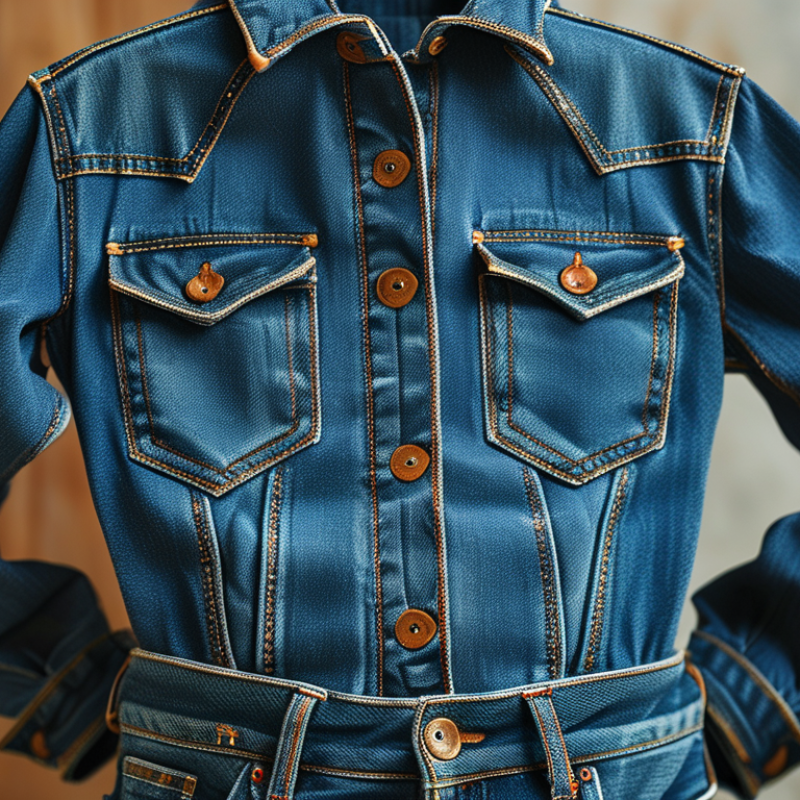
Top 10 Differences Between Jeans and Denim Explained

Definitions and Origins of Jeans and Denim

Top 10 Differences Between Jeans and Denim Explained

Definitions and Origins of Jeans and Denim

Denim is a fabric, while jeans are trousers made from that fabric. Denim usually uses a sturdy cotton twill weave. Its diagonal ribs create strength and a recognizable surface. Traditionally, the warp yarns receive color, while the weft yarns remain lighter. This design gives denim its blue outside and pale inner face.

The word denim is commonly linked to serge de Nîmes, meaning “serge from Nîmes.” Serge described a durable twill cloth. Historical explanations are not perfectly simple, however. Some accounts connect jeans with Genoa, an Italian port associated with sturdy cotton clothing. The word may reflect an older French form of the city’s name. Evidence varies, so confident one-line origin stories can mislead readers.

Jeans developed as practical work trousers. Their firm cloth resisted wear around the knees, pockets, and seat. Rivets, reinforced seams, and useful pockets improved everyday durability. I have noticed how worn denim changes at stress points first, especially where fabric bends repeatedly. That fading records movement almost like a map. Yet not every pair uses traditional denim today. Stretch fibers, lighter weaves, and different finishes can alter the feel. The boundary between “jeans” and “denim” is therefore useful, but not absolute.

Top 10 Differences Between Jeans and Denim Explained

Jeans are a type of garment, while denim is the cotton fabric commonly used to make them. The timeline below highlights ten important differences and historical milestones.

Key differences:

  1. Definition: Jeans are trousers; denim is a fabric.
  2. Material: Jeans are often made from denim, while denim can also be used for jackets, shirts, skirts, bags, and upholstery.
  3. Weave: Traditional denim uses a sturdy cotton twill weave with diagonal lines.
  4. Color: Classic denim is commonly indigo-dyed, but denim is also produced in black, white, grey, and other colors.
  5. Word origin: “Jeans” is associated with Genoa, while “denim” comes from the French phrase “serge de Nîmes.”
  6. Garment purpose: Jeans were historically associated with practical workwear; denim describes the material itself.
  7. Construction: Jeans may include features such as pockets, belt loops, stitching, buttons, zippers, and rivets.
  8. Durability: Denim’s tightly woven cotton structure gives jeans resistance to abrasion and repeated wear.
  9. Comfort: Traditional denim has little stretch, while modern jeans may contain elastane or other stretch fibers.
  10. Care and finishing: Jeans can be washed, faded, distressed, or coated, while denim refers primarily to the textile before or after finishing.

Fabric Composition and Textile Manufacturing Differences

Top 10 Differences Between Jeans and Denim Explained

Fabric Composition and Textile Manufacturing Differences

Denim is a woven fabric, while jeans are trousers made from that fabric. In a textile mill, cotton yarns commonly form denim’s base. Some fabrics include elastane for stretch or recycled fibers for different performance needs. The exact blend changes softness, recovery, breathability, and durability. It is not always pure cotton.

Traditional denim uses a twill structure. Dark warp yarns pass over lighter weft yarns, creating the familiar diagonal surface. Indigo dye often colors the warp before weaving, while the weft remains pale. This contrast becomes clearer as the surface wears. During production, technicians check fabric weight, shrinkage, tear strength, and colorfastness. Small testing errors can still affect the final fit.

Jeans manufacturing begins after the fabric leaves the mill. Pattern pieces are cut, stitched, reinforced, and fitted with closures and pockets. Wash treatments may soften the material, reduce color, or create uneven fading around knees and seams. These effects depend on time, moisture, temperature, and abrasion. A pair can look rugged but feel light if its denim has a low fabric weight. Conversely, heavy denim may resist wear while feeling stiff for weeks. I have found that labels often simplify this relationship. Fabric quality is more complicated than appearance.

Design, Construction, and Functional Characteristics

Top 10 Differences Between Jeans and Denim Explained

Design, Construction, and Functional Characteristics

Jeans and denim are often treated as the same thing, but they describe different parts of a garment. Denim is the fabric. Jeans are trousers made from denim, although other fabrics can imitate them. This distinction changes how we judge design, construction, and performance. Denim usually uses a twill weave, with diagonal ribs formed by yarns crossing unevenly. Its cotton yarns may be ring-spun, open-end spun, smooth, hairy, or blended with stretch fibers. Each choice affects softness, strength, drape, and recovery. Small details matter.

Jeans add a specific design language. They commonly feature five pockets, reinforced stress points, belt loops, a fly, and sturdy seams. Rivets can support pocket corners, while bar tacks secure areas exposed to pulling. A denim jacket may use similar fabric but needs different shaping and closures. Work jeans often use heavier cloth and roomier cuts. Slim jeans prioritize movement control and a cleaner outline. Stretch denim feels comfortable, yet excessive elastane can reduce long-term shape retention. I have found that a firm pair softens slowly, while a lightweight pair feels easier on day one.

Function also depends on finishing. Raw denim has little surface treatment and changes through wear. Washed denim may feel softer immediately, but its color and texture are already altered. Brushing, sanding, resin treatment, and washing can create contrast or reduce stiffness. These processes may also weaken fibers if handled aggressively. Care labels deserve attention. Cold washing helps, but it does not solve every problem. Air-drying usually protects shape better than high heat. The imperfect part is fit: measurements alone cannot predict comfort, because posture, pocket placement, and fabric recovery interact. A good comparison requires wearing, bending, sitting, and checking the seams afterward.

Historical Development and Cultural Significance

Top 10 Differences Between Jeans and Denim Explained

Historical Development and Cultural Significance

Denim is a textile; jeans are trousers made from it. That distinction matters. Denim’s name is commonly linked to “serge de Nîmes,” a durable French fabric associated with workwear. During the nineteenth century, cotton twill became practical for miners, railway workers, and farm laborers. Metal rivets strengthened stress points, while indigo dye helped conceal dust and repeated wear. These details made denim functional before it became fashionable.

History leaves marks. After the Second World War, jeans moved from industrial settings into youth culture, music, cinema, and protest movements. Their rough texture suggested independence, while their blue color became widely recognizable. This meaning was never universal. In some communities, jeans represented freedom; elsewhere, they suggested imported modernity or social rebellion. The garment also crossed gender boundaries gradually, although that change was uneven and incomplete.

Industry data shows why denim still matters materially. Textile Exchange’s 2024 Materials Market Report estimated global fiber production at 124 million tonnes in 2023, with cotton representing roughly one-fifth. The United Nations Environment Programme reports that textiles create about 2–8% of global greenhouse-gas emissions. These figures complicate denim’s cultural appeal. A faded pair may carry personal memories, yet its production still uses land, water, energy, and chemicals. I sometimes treat durability as automatically sustainable, but that assumption needs closer checking. Fiber origin, washing, garment life, and disposal all influence the real impact.

Uses, Care Requirements, and Buying Considerations

Denim is the fabric, while jeans are trousers commonly made from it. This difference matters when choosing clothing for daily use. Denim jackets, skirts, shirts, and bags may need different care than jeans. Heavy denim suits workwear and outdoor tasks, but lighter denim feels better in warm weather. Stretch denim offers easier movement, although it may lose shape faster. I learned this after buying a rigid pair that looked excellent but felt uncomfortable during long journeys.

Check the fabric weight, fiber blend, stitching, and pocket construction before buying. Dense denim often lasts longer, but it can feel stiff and require patience. Choose a comfortable waist and enough room for sitting, not only standing. Washing jeans less often can preserve color and reduce fabric stress. Air them out, remove small stains locally, and wash them inside out with cool water. A gentle detergent helps protect dark shades. Hang them away from strong sunlight, which can create uneven fading. Tumble drying is convenient, but heat may shrink cotton and damage stretch fibers. My own care routine is not perfect; I still use a dryer when time is limited. Inspect belt loops, hems, and inner thighs regularly. Small repairs can prevent a larger tear. For raw or unwashed denim, follow the maker’s care label carefully, because shrinkage and color transfer can be significant.

FAQS

: What is the main difference between denim and jeans?

: Denim is a fabric. Jeans are trousers commonly made from denim.

What makes denim durable?

Its twill weave creates diagonal ribs and supports long-term wear. Strong seams add further protection.

Why do jeans often have rivets and reinforced seams?

These details protect pocket corners, belt loops, and other areas exposed to pulling.

How do different denim weights affect comfort?

Heavy denim feels sturdy but stiff. Lightweight denim feels easier in warm weather and during travel.

Is stretch denim always better for movement?

It can improve comfort and bending. Too much stretch may reduce shape retention over time.

What is the difference between raw and washed denim?

Raw denim has little surface treatment and changes through wear. Washed denim feels softer but has altered color and texture.

How should jeans be washed and dried?

Wash them inside out with cool water and gentle detergent. Air-drying usually protects shape better than high heat.

What should shoppers check before buying jeans?

Check fabric weight, fiber blend, stitching, waist comfort, and room for sitting. Standing alone can mislead you.

Can durable jeans be called sustainable automatically?

No. Environmental impact also depends on fiber sources, water, energy, chemicals, garment life, and disposal.

How can small repairs extend a pair’s life?

Repair loose belt loops, hems, or inner thighs early. Small tears rarely stay small.

Conclusion

Understanding what is the difference between jeans and denim begins with their roles: denim is the sturdy cotton fabric, while jeans are garments commonly made from that fabric. Denim is produced through a specialized weaving process, often using colored warp yarns and lighter weft yarns, whereas jeans involve design decisions such as fit, seams, pockets, fasteners, and reinforcements.

Their histories are connected to workwear, but jeans gradually became symbols of everyday practicality, youth culture, and personal style. Denim can also be used for jackets, shirts, bags, and other products, while jeans specifically refer to trousers. Differences in fabric weight, stretch, washing, and construction affect comfort, durability, and appearance. Proper care usually includes washing less frequently, using cool water, and avoiding excessive heat to help preserve color and shape. When buying, shoppers should consider fabric quality, stitching, fit, flexibility, intended use, and maintenance needs rather than focusing only on appearance.

Liam

Liam

Liam is a dedicated marketing professional with a profound expertise in the industry, where he excels at highlighting the unique advantages of our core products. With a keen understanding of market trends and consumer needs, Liam frequently updates our company’s professional blog, providing......