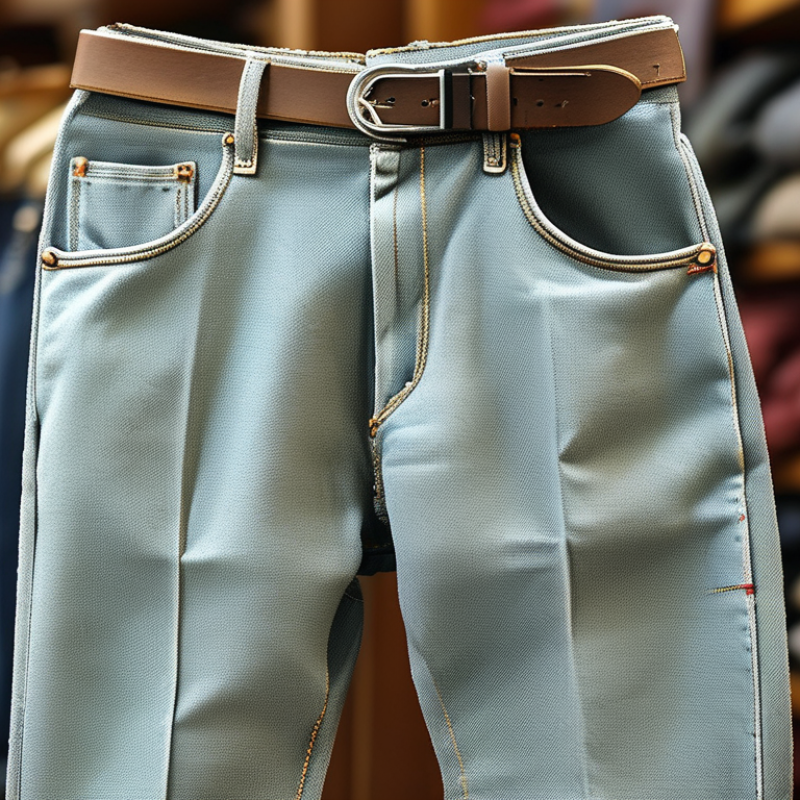
Top Ways to Tell If Trousers Are Good Quality?

Time:2026-09-11 Author:Sienna
0%

Knowing how to tell if trousers are good quality begins with more than checking the label. A high price can suggest better materials, but it never proves careful construction. Experienced tailors inspect the waistband, pocket openings, seams, and hem before judging the whole garment. They also examine how the trousers behave after sitting, walking, and bending.

Menswear expert Simon Crompton has said, “The quality of a garment is revealed in the details.” That principle is useful here. Look for even stitching, secure bar tacks, smooth seam alignment, and a waistband that keeps its shape. The fabric should feel substantial without becoming stiff or overly heavy. Wool trousers should recover after gentle pressure. Cotton trousers should resist twisting at the legs. Small details matter.

Check the inside, too.

Loose threads are not always a failure. Handmade trousers may show minor irregularities. However, repeated skipped stitches, puckering, or weak button attachments deserve caution. A reliable assessment also considers fit. Excellent fabric cannot rescue a badly balanced seat or a waistband that digs into the stomach. This is where shoppers, including experienced ones, sometimes judge too quickly.

Brand reputation helps, but it is only supporting evidence. Factory quality can vary between collections. The most honest test combines touch, movement, construction, and care instructions. This guide will examine those signals closely, while acknowledging an uncomfortable truth: even careful inspection cannot predict every problem after months of wear.

Top Ways to Tell If Trousers Are Good Quality?

Check Fiber Content and Fabric Weight Against Labeling Standards

Quality trousers begin with honest fiber information.

Check the sewn-in label, not only the hangtag. It should state fiber names and percentages clearly, such as “98% cotton, 2% elastane.” Labeling rules vary by market, so compare the wording with local textile disclosure standards. ISO 1833 provides recognized methods for measuring fiber composition. Retail descriptions can still be incomplete.

Fabric weight matters, but it does not prove quality alone.

ASTM D3776 is commonly used to measure textile mass, usually reported as grams per square metre (GSM). A medium-weight trouser fabric may feel structured around 250–400 GSM, depending on weave and fiber. The Textile Exchange Materials Market Report 2024 recorded global fiber production at about 124 million tonnes in 2023. Polyester represented approximately 57%, while cotton accounted for about 19%. These figures explain why blends appear so often. They do not guarantee durability.

Tips:

Turn the trousers inside out. Compare the label with the product description. Feel whether the fabric weight matches its stated purpose.

Lightweight cloth should not feel suspiciously flimsy, while heavy cloth should still bend naturally at the knee. Check one sample against another; uneven thickness can reveal inconsistent weaving.

For expensive or technical garments, request laboratory testing based on methods such as ASTM D629 for fiber analysis.

A heavier fabric is not automatically better. I have seen dense cloth that pills quickly. Quality assessment needs evidence, not confidence.

Assess Weave Density, GSM, and Shrinkage After ISO 6330 Washing

Top Ways to Tell If Trousers Are Good Quality?

A reliable trouser check begins with the fabric, not the label. Hold the cloth near a window and inspect its weave under steady light. High weave density usually creates a firmer surface with fewer visible gaps. Count the warp and weft threads within a marked square when precision matters. Loose areas can reveal uneven tension or weak construction. My first inspection was too casual; dark fabric hid several thin spots.

GSM, or grams per square metre, gives useful weight information. Weigh a conditioned fabric sample and compare it with the stated specification. A higher GSM may suggest durability, but it does not guarantee comfort or strength. Heavy cloth can still contain poor yarns or unstable finishing. Check several areas, because one sample may not represent the whole trouser panel. A small difference is normal, yet a large variation deserves investigation.

Shrinkage becomes clearer after ISO 6330 washing. Mark measured points on the waistband, inseam, and outseam before washing. Record each length carefully, then use the selected ISO 6330 procedure consistently. Keep the detergent, cycle, drying method, and water conditions documented. After washing, measure the same points again. Calculate shrinkage as the size reduction divided by the original measurement. A waistband that twists or an inseam that shortens unevenly signals trouble. I once blamed the fabric, but careless drying had influenced the result. Repeat testing can expose that mistake.

Inspect Seam Strength Using ASTM D1683 and Stitch Density

Top Ways to Tell If Trousers Are Good Quality?

Strong trousers begin with dependable seams. Inspect the inner leg, seat, and pocket openings under bright light. The stitching should look even, secure, and free from skipped loops. Look closely. A loose thread can signal poor tension or rushed sewing.

For a more reliable assessment, use ASTM D1683/D1683M as a reference for sewn-seam strength in woven fabrics. This laboratory method evaluates how a seam fails under controlled tension. It can reveal whether fabric tears, stitches break, or thread pulls away. A professional inspector may test samples from high-stress areas, rather than trusting appearance alone. The seat seam deserves special attention because sitting creates repeated force.

Stitch density also provides useful evidence. Count the stitches across a measured length, such as three centimeters, and compare similar seams. Very sparse stitching may reduce holding power, while excessive density can weaken fabric through needle damage. There is no single ideal count for every trouser fabric. Fiber type, fabric weight, seam allowance, and thread size all matter. Not always. A dense seam is not automatically stronger.

During inspection, gently stretch the seam and watch for small openings between stitches. Mark any uneven section before washing or wearing the trousers. This step is easy to skip, yet movement can expose weaknesses that a flat inspection misses. I would also record the test conditions, because results can change with moisture, tension, and operator technique. Perfect judgment is difficult. Careful notes make it more reliable.

Top Ways to Tell If Trousers Are Good Quality? - Inspect Seam Strength Using ASTM D1683 and Stitch Density

Quality Dimension How to Inspect or Measure Practical Reference for Trousers Good-Quality Indication Warning Signs
Seam strength Test representative sewn seams with the strip method described in ASTM D1683. Record the maximum force at seam failure and identify whether the fabric, thread, or stitches failed first. Indicative screening ranges for medium-weight woven trousers are commonly around 180–300 N, but the appropriate value depends on fabric weight, fiber type, seam construction, and intended use. The seam withstands expected loading without sudden thread breakage, excessive opening, or fabric tearing beside the stitch line. Low force, progressive seam opening, thread breakage at low load, or tearing immediately beside the seam.
Stitch density Count the number of complete stitches per inch (SPI) along a straight, undisturbed section of the seam. Check several locations rather than one point. Typical lockstitch trousers may use approximately 10–14 SPI. Heavier fabrics may use fewer stitches, such as about 8–12 SPI, to reduce perforation and needle damage. Stitch spacing is consistent, balanced, and appropriate for the fabric thickness and seam purpose. Very low density, irregular spacing, skipped stitches, crowded stitches, or visible fabric perforation.
Seam allowance Measure the distance from the stitch line to the raw fabric edge at the inseam, outseam, seat seam, and pocket attachments. Many trouser seams use approximately 10–15 mm of allowance, although construction requirements vary by seam type and garment design. The allowance is wide enough for secure stitching and remains consistent along the seam. Narrow or uneven allowance, stitch lines too close to the edge, or exposed raw edges likely to unravel.
Backtacking and seam securing Inspect the beginning and end of seams, especially at pockets, belt loops, fly construction, waistband joins, and crotch seams. A secure backtack commonly extends about 10–15 mm or uses an equivalent bartack or reinforcement appropriate to the construction. Thread ends are secured without bulky knots, loose tails, or distortion of the fabric. Unsecured thread ends, short or weak backtacks, loose loops, and seams that begin to open during light pulling.
Stitch balance and tension Examine both sides of the seam and gently stretch the fabric across the stitch line. Look for balanced interlocking of the needle and bobbin threads. The exact tension setting is machine- and fabric-dependent; visual balance and absence of loops or puckering are the relevant quality checks. Threads lie evenly within the seam, with no loose loops, tight ridges, or visible thread pulled to one side. Loose bobbin loops, thread looping on the surface, seam puckering, or fabric distortion along the stitch line.
Crotch and seat-seam reinforcement Check whether the crotch curve and seat seam have smooth stitching, adequate seam allowance, and suitable reinforcement for the garment's intended activity. Reinforcement may include a second stitch line, durable seam construction, or a suitable tape or gusset; requirements depend on use and fabric. The curved seam follows the pattern smoothly and shows no skipped stitches, sharp corners, or concentrated stress points. Single fragile stitch line in a high-stress area, rippling, skipped stitches, or visible strain when the garment is worn.
Seam appearance after laundering Wash and dry according to the care instructions, then inspect seam opening, puckering, shrinkage, thread damage, and distortion. Compare the garment before and after laundering; acceptance limits should be established for the specific fabric and product specification. Seams remain closed and reasonably flat, with no major distortion or new thread breakage. Seam puckering, twisting, excessive opening, shrinkage-related stress, or fraying after care testing.
Thread suitability Check thread coverage, abrasion resistance, compatibility with the fabric, and whether the thread size is suitable for the needle and stitch density. Polyester sewing thread is widely used for woven trousers because of its strength and abrasion resistance, but the correct size depends on fabric and construction. Thread is evenly formed, adequately covered, and free from excessive fuzz, breakage, or color inconsistency. Thin thread in a high-load seam, excessive fuzz, frequent thread breaks, or thread damage caused by abrasion.
Test reporting and acceptance criteria Document fabric type, seam location, stitch type, SPI, seam allowance, test direction, failure mode, and measured force when using ASTM D1683. Use product-specific specifications rather than a universal pass/fail value because ASTM D1683 provides a test method, not one quality limit for every trouser. Results are repeatable across samples and are judged against clearly defined performance requirements. Only visual inspection is recorded, test locations are unclear, or numerical results are compared without considering fabric and construction.

Note: ASTM D1683 is a test method for evaluating the failure of sewn seams in woven fabrics. The numerical ranges above are practical screening references, not ASTM acceptance criteria; final requirements should be established for the specific trouser design, fabric, and intended end use.

Compare Abrasion Resistance Through ISO 12947 Martindale Cycles

Good trousers should survive more than a few comfortable walks. Their fabric must resist rubbing at the seat, inner thighs, and pocket edges. The ISO 12947 Martindale test measures this performance by rubbing a fabric specimen against standard wool under controlled pressure. The test records cycles until visible breakdown, such as two broken yarns or a hole.

For everyday trousers, 10,000 to 20,000 Martindale cycles usually indicate light-to-medium resistance. Fabrics reaching 30,000 cycles or more are better suited to frequent commuting, workwear, or repeated washing. These practical ranges appear in testing guidance from independent laboratories, including SGS and Intertek, while ISO 12947-2 defines the testing procedure rather than a universal quality threshold. Higher numbers help, but they do not guarantee longer wear.

Check the test conditions carefully. A 9 kPa pressure setting can produce different results from a heavier loading condition. Fiber blend, fabric construction, finish, and color can also change performance. A tightly woven twill may feel stronger than a softer fabric, even when both show similar cycle counts. That is where shopping becomes imperfect. Martindale data compares abrasion resistance, not comfort, seam strength, or shape retention. The European Commission’s Product Environmental Footprint guidance also warns against judging textile durability through one indicator alone. Look for the cycle count, test pressure, fabric composition, and test laboratory together. A clear report is a stronger quality signal than a large number printed without conditions.

Top Ways to Tell If Trousers Are Good Quality: Compare Abrasion Resistance Through ISO 12947 Martindale Cycles

Higher Martindale cycle counts generally indicate that trouser fabric can withstand more rubbing before visible breakdown. ISO 12947 defines the abrasion-test method, but it does not set one universal pass/fail value for all trousers. Use the checkpoints below as practical comparison levels and always compare fabrics tested under the same conditions.

Practical interpretation: around 10,000 cycles may suit occasional wear, 20,000–30,000 cycles is a stronger range for everyday trousers, and 50,000 cycles or more is typically associated with demanding work or uniform use. These are comparison benchmarks, not official ISO quality grades.

Evaluate Colorfastness Under AATCC 61 Laundering Tests

Top Ways to Tell If Trousers Are Good Quality?

Colorfastness is a practical quality signal for trousers. A deep navy pair should not fade after a few washes. It should also avoid staining lighter garments. AATCC 61 provides an accelerated laundering test for this assessment. The method uses controlled water, detergent, temperature, and agitation. Test conditions vary by the selected procedure. Therefore, the laboratory should record every setting clearly.

Cut fabric specimens from visible and high-friction areas. Consider the seat, thigh, pocket edge, and waistband. Sew them with multifiber adjacent fabric when required. Run the specimens through the specified laundering cycle. After drying, compare color change against a gray scale. Check the adjacent fabric for dye transfer. Instrumental readings can support visual grading, but they should not replace careful inspection.

Look closely at seams and pocket openings. These areas may show uneven fading first. A strong result suggests better resistance, not permanent color. The test accelerates washing, so it cannot perfectly predict every home laundry routine. Water hardness, detergent choice, sunlight, and drying heat still matter. A single test can mislead. Repeat testing across production lots when consistency matters. In practice, trousers with stable color, limited staining, and even surface appearance usually feel more dependable. Yet appearance alone is insufficient. Check fabric strength, seam security, and shrinkage separately. That broader review catches weaknesses that colorfastness testing may miss.

FAQS

: How can I inspect trouser seams at home?

: Use bright light to examine the inner leg, seat, and pocket openings. The stitching should look even and secure. Watch for skipped loops, loose threads, or small gaps. Gently stretch each seam. Movement can reveal weaknesses that a flat inspection misses.

Why is the seat seam especially important?

Sitting creates repeated pressure on the seat seam. Inspect this area carefully for opening stitches, fabric tearing, or pulled thread. A neat appearance does not prove lasting strength. The seat needs extra attention.

What does ASTM D1683 testing measure?

ASTM D1683 evaluates sewn-seam strength under controlled tension. It shows whether fabric tears, stitches break, or thread pulls away. Test samples should come from high-stress areas. The result is more useful than appearance alone.

Does a higher stitch density always mean better trousers?

No. Dense stitching is not automatically stronger. Sparse stitches may reduce holding power. Excessive stitching can damage fabric with repeated needle holes. Fiber type, fabric weight, thread size, and seam allowance also matter. Not always.

How can Martindale testing help compare trouser fabrics?

ISO 12947 measures resistance to rubbing under controlled conditions. It focuses on areas such as the seat, inner thighs, and pocket edges. Around 10,000 to 20,000 cycles often suit light-to-medium use. Around 30,000 cycles or more may suit frequent wear. These figures are only practical guides.

What details should I check in an abrasion report?

Check the cycle count, pressure setting, fabric composition, and test laboratory. A higher cycle number does not guarantee comfort or shape retention. Test pressure can change the result. A clear report is better than an unexplained large number.

How is trouser colorfastness tested?

AATCC 61 uses controlled water, detergent, temperature, and agitation. After laundering, inspectors compare color change with a gray scale. They also check whether dye stains adjacent lighter fabric. Test pieces should include the seat, thigh, waistband, and pocket edge.

Can colorfastness testing predict every home wash?

No. The test accelerates laundering under selected conditions. Water hardness, detergent, sunlight, and drying heat can change real results. Repeat testing across production lots improves confidence. I would not trust one test alone. Check shrinkage, fabric strength, and seam security too.

Conclusion

Learning how to tell if trousers are good quality starts with checking whether the fiber content and fabric weight match the information on the care label. A reliable assessment should also consider weave density, GSM, and how much the fabric shrinks after washing under ISO 6330 conditions. Dense, stable fabric with limited shrinkage is generally a sign of better construction and durability.

Next, inspect the seams for secure stitching, even spacing, and resistance to pulling, using principles related to ASTM D1683. Durability can also be compared through abrasion testing, such as ISO 12947 Martindale cycles, which indicates how well the fabric withstands repeated rubbing. Finally, evaluate colorfastness through AATCC 61 laundering tests to see whether the trousers retain their color after washing. Together, these checks provide a practical, objective way to judge quality beyond appearance alone.

Sienna

Sienna

Sienna is a skilled marketing professional with a deep expertise in our company’s core products and services. With a passion for innovation and detail, she plays a pivotal role in crafting insightful blog posts that not only highlight the unique features of our offerings but also provide valuable......