Choosing summer shorts is not simply a matter of picking the lightest fabric. The right material must manage sweat, heat, movement, washing, and everyday wear. What materials are best for summer shorts depends on your climate, activity, and personal comfort.
Textile scientist Susan M. Watkins describes clothing as “a portable environment.” That idea matters on a hot afternoon. Linen can feel cool and airy beside the skin. However, it wrinkles quickly and may need careful pressing. Cotton feels familiar and soft, but heavy cotton can hold moisture after a long walk. Tencel and other lyocell fabrics offer a smooth touch and useful moisture control. Some recycled polyester blends dry faster during travel or exercise. They may feel less natural, though.
The fabric is only part of the decision. A loose weave can improve airflow, while a dense weave may offer better durability. Pocket lining, waistband structure, and seam quality also affect comfort. I once chose thin shorts for a humid trip and regretted it after one hour. They dried quickly, but the fabric clung uncomfortably. No material wins every situation. That is worth remembering.
This guide compares linen, cotton, hemp, lyocell, nylon, and blended fabrics. It considers breathability, drying speed, softness, strength, care needs, and environmental trade-offs. The goal is not to promote one universal winner. It is to help readers choose shorts that feel practical at the beach, comfortable on a city walk, and reliable after repeated washing.
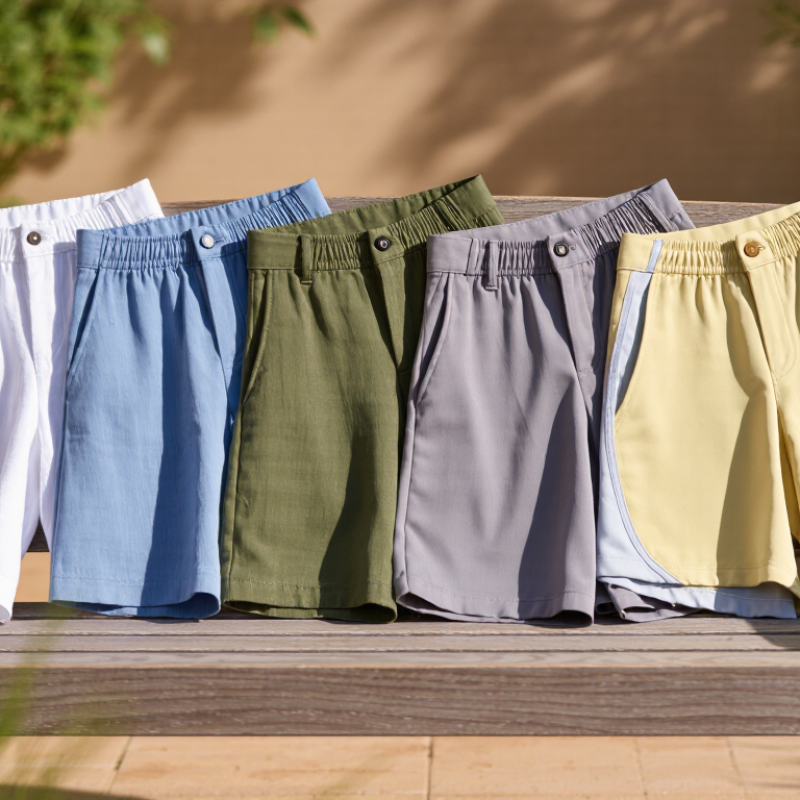
Choosing summer-shorts material starts with performance, not appearance. In hot weather, fabric should allow airflow and move sweat away from the skin. Breathability matters during slow walks and intense outdoor activity. Moisture management matters even more when sweat collects around the waistband. A lightweight fabric can feel cooler, but it should not become transparent in strong sunlight. Check stretch, recovery, and opacity before approving the final material.
Fit testing reveals details that a fabric swatch cannot show. Walk, sit, climb stairs, and remain outdoors for at least twenty minutes. Notice whether the shorts cling behind the knees or restrict the hips. A small amount of stretch can improve movement, while excessive stretch may reduce shape stability.
Quick-drying fibers help after washing or sudden rain. However, fast drying alone does not guarantee comfort. A rough inner surface can irritate skin.
Durability also belongs in the performance brief. Examine seam strength, pilling resistance, colorfastness, and shrinkage after repeated washing. Cotton-rich fabrics often feel soft and familiar, but they may hold moisture longer. Blended fabrics can dry faster, though their comfort varies by construction. I once preferred the lightest sample, then found it wrinkled badly after sitting. That choice was not ideal. A balanced fabric may perform better than the thinnest option. Test real samples, record results, and question attractive claims that lack measurable evidence.
When I test summer shorts, I check airflow, sweat spread, and drying speed. A loose linen weave feels cool because air moves easily through its fibers. It works well during slow walks and outdoor lunches. However, linen absorbs moisture and can feel damp after vigorous exercise. It also wrinkles quickly. That is not always a problem, but it can affect appearance.
Cotton feels soft against warm skin and handles ordinary daily wear comfortably. Its weakness appears during heavy sweating. The fibers hold water, making the fabric heavier and slower to dry.
Polyester and nylon usually move moisture away from the skin more efficiently. Their lightweight construction can dry within minutes in moving air. Still, tightly woven synthetic fabric may feel stuffy when ventilation is poor. The fiber alone does not decide comfort.
Fabric construction matters greatly. Mesh panels, a relaxed cut, and shorter inseams can improve airflow. A cotton-polyester blend may balance softness with faster drying. I have found that blends often feel more practical than pure fabrics during travel. Yet, this depends on the weave and finish. A smooth fabric can cling when wet. A textured surface may breathe better. Check the inside after washing, too. Some shorts lose softness or dry unevenly. Comfort is personal, and my preferred fabric may feel wrong in a hotter climate.
Daily shorts must survive movement, washing, heat, and occasional rough seating. Textile Exchange’s Materials Market Report 2024 estimates global fiber production reached 124 million tonnes in 2023. Polyester represented about 57% of that volume, while cotton represented roughly 22%. These figures show availability, not quality. A fabric’s construction still matters more than its fiber label.
For durability, inspect the weave, seam strength, and surface density. A tightly woven polyester-cotton blend usually resists abrasion better than a loose, lightweight fabric. ASTM D4966 Martindale testing can measure abrasion resistance, although home washing may produce different results. Check for pilling after repeated rubbing. That small detail matters.
Stretch needs balance. Around 2–5% elastane can improve mobility, but poor recovery creates loose knees and a tired waistband. Look for fabric described as having strong stretch recovery, then pull it gently and watch how quickly it returns. Cotton feels familiar and breathable, yet it can hold sweat and lose shape. Polyester dries faster, but it may feel clammy without moisture-management finishing. Personal testing helps: sit, bend, and walk before buying. I still get this wrong sometimes. A soft fabric can become uncomfortable after two hours. In daily wear, comfort depends on airflow, weight, recovery, and how the fabric feels against bare skin.
Choosing summer shorts starts with your local climate, not the latest fashion advice. In humid weather, linen or lightweight cotton can feel cooler against damp skin. Linen dries reasonably well, but it wrinkles quickly and may need more care. In dry heat, breathable cotton offers comfort during relaxed walks and outdoor meals. However, cotton absorbs sweat and can stay wet during long activities. I learned this after wearing heavy cotton shorts on a long afternoon hike.
Your activity also changes the best material. For cycling, travel, or frequent walking, choose a lightweight blend with stretch and moisture management. Synthetic fibers often dry faster and resist repeated washing. Check the fabric weight and seams, especially around pockets and the waistband. For swimming or beach use, quick-drying fabric is more practical than ordinary cotton. Still, fabric claims are not always perfect. Test movement, airflow, and comfort before trusting the label.
Tips: Hold the shorts near a window to judge thickness. Sit, squat, and walk before buying. Choose a looser fit for humid days. If your skin feels irritated, avoid rough seams or stiff fibers. Personal preference matters, too. Some people prefer the soft, familiar feel of cotton, even when drying takes longer. I sometimes choose comfort over performance, and that choice is not always the most efficient. Washability, texture, modesty, and color should fit your real routine.
Compare common summer-short materials by climate performance, activity suitability, comfort, maintenance, and personal priorities.
| Material | Best Climate | Best Activities | Breathability | Moisture Management | Drying Speed | Comfort & Feel | Durability | Care Considerations | Best For |
|---|---|---|---|---|---|---|---|---|---|
| Lightweight Cotton | Dry or moderately humid summer weather | Casual wear, sightseeing, relaxed travel | ★★★★☆ | Absorbs sweat well but can feel damp after heavy activity | Slow to moderate | Soft, familiar, and comfortable against the skin | ★★★★☆ | Machine washable; may shrink or wrinkle unless pre-shrunk or blended | Everyday comfort and casual outfits |
| Linen | Hot, dry, or breezy climates | Resort wear, beach walks, outdoor dining, casual travel | ★★★★★ | Absorbs moisture and releases heat effectively | Moderate to fast | Cool and airy; naturally textured and becomes softer over time | ★★★★☆ | Wrinkles easily; gentle washing and air-drying help preserve shape | Maximum airflow and relaxed summer style |
| Hemp Blend | Warm climates, including moderately humid conditions | Daily wear, travel, walking, casual outdoor activities | ★★★★☆ | Manages moisture reasonably well and becomes more comfortable with wear | Moderate | Dry, breathable, and slightly textured | ★★★★★ | Usually easier to handle when blended with cotton or lyocell; follow care label | Natural-fiber durability with a casual texture |
| Lyocell | Warm climates where softness and moisture control are priorities | Travel, commuting, casual wear, light activity | ★★★★☆ | Absorbs and distributes moisture effectively | Moderate | Very smooth, soft, and fluid with a cool touch | ★★★☆☆ | Wash gently; avoid excessive heat and harsh abrasion | Soft comfort and a polished drape |
| Polyester Performance Fabric | Humid climates and variable weather | Running, hiking, cycling, sports, active travel | ★★★☆☆ | Wicks moisture and generally resists water absorption | ★★★★★ | Lightweight and flexible; quality varies by knit and finish | ★★★★★ | Easy-care and quick-drying; wash regularly to reduce odor buildup | High-output activities and frequent washing |
| Nylon | Warm, humid, or changeable conditions | Hiking, water activities, travel, outdoor recreation | ★★★☆☆ | Low absorbency helps it resist saturation | ★★★★★ | Smooth, lightweight, and often slightly crisp | ★★★★★ | Resists abrasion; protect from prolonged high heat and strong sunlight | Lightweight performance and outdoor durability |
| Cotton-Polyester Blend | Most warm-weather settings | Casual wear, commuting, family activities, travel | ★★★★☆ | Balances cotton absorption with polyester moisture release | Moderate to fast | Comfortable, stable, and less prone to wrinkling than pure cotton | ★★★★☆ | Generally easy-care; check blend ratio for expected shrinkage and drying time | A practical balance of comfort and maintenance |
| Stretch-Woven Blend | Warm climates requiring freedom of movement | Golf, commuting, travel, walking, light exercise | ★★★☆☆ | Depends on the main fiber; synthetic-rich versions usually dry faster | Moderate to fast | Flexible and comfortable for movement; recovery depends on elastane content | ★★★★☆ | Avoid excessive heat, which can weaken stretch fibers over time | Mobility, wrinkle resistance, and versatile daily wear |
| Seersucker Cotton | Hot and humid climates | Office-casual wear, outdoor events, everyday summer use | ★★★★★ | Absorbs moisture while the puckered surface improves air circulation | Moderate | Light, airy, and less clingy than smooth cotton fabrics | ★★★☆☆ | Usually easy-care; avoid excessive ironing to preserve the textured surface | Breathable structure with reduced skin contact |
Quick selection guide: Choose linen or seersucker for maximum airflow, polyester or nylon for intense activity and rapid drying, cotton or cotton blends for everyday comfort, and hemp blends for a durable natural-fiber option. Fabric weight, weave, fit, and lining also affect summer comfort.
Care requirements often decide whether summer shorts remain useful or become closet clutter. In my experience, lightweight cotton feels comfortable against warm skin, but it may shrink or wrinkle after careless washing. Linen stays airy and dries quickly, although its creases can look untidy by afternoon. A cotton blend may resist wrinkles better and need less ironing. Check the care label before buying. Cold washing, gentle cycles, and line drying usually protect fibers and reduce energy use. Avoid fabric softener when possible. It can weaken moisture control over time. Small details matter.
Sustainability needs a practical view, not just attractive language. Look for durable stitching, responsibly sourced fibers, and clear information about production. Recycled materials can reduce waste, but they are not automatically the best choice. Some fabrics shed tiny fibers during washing, while others require more processing. No material is perfect. I still make mistakes when choosing between comfort and environmental impact. Overall value means more than a low price. Consider how often you will wear the shorts, how well they hold their shape, and whether repairs are realistic. A slightly stronger pair may cost more initially, yet serve through many hot seasons. That calculation feels less exciting, but it is more honest.
Linen and lightweight cotton feel cooler against damp skin. Linen dries reasonably well but wrinkles quickly. Choose a looser fit for better airflow.
Cotton feels soft during relaxed walks and outdoor meals. However, it absorbs sweat and may stay wet for hours. I learned this during a long afternoon hike.
Choose a lightweight blend with stretch and moisture management. Synthetic fibers often dry faster and handle repeated washing better. Check the seams carefully.
Yes, quick-drying fabric is usually more practical near water. Ordinary cotton can feel heavy when soaked. Still, fabric claims need real testing.
Hold them near a window to judge thickness. Sit, squat, and walk around. Test movement and airflow. Test them first.
Avoid rough seams, stiff fibers, and tight waistbands. Run your fingers along the inner seams. If irritation appears quickly, choose another fabric.
Read the care label before purchasing. Cold washing, gentle cycles, and line drying usually protect fibers. Avoid fabric softener when possible. Small details matter.
Not necessarily. Recycled fibers can reduce waste, but they may involve extra processing. Consider fiber shedding, stitching strength, durability, and repair options. No material is perfect.
Consider wear frequency, shape retention, comfort, and washing needs. A stronger pair may cost more initially but last through several hot seasons. I sometimes choose comfort over performance. That choice is not always efficient.
Choosing the right fabric is essential for creating comfortable, practical summer shorts. Start by identifying key performance needs, such as breathability, moisture control, lightweight feel, and quick drying. Natural fibers like linen and cotton offer softness and airflow, while synthetic options such as nylon or polyester may provide stronger moisture management and faster drying. Blended fabrics can balance comfort, durability, and everyday performance.
When deciding what materials are best for summer shorts, consider how the shorts will be used, the local climate, and personal preferences. Stretch can improve mobility, while durable construction supports frequent wear. Soft textures and a comfortable fit are especially important for daily activities. Also review care requirements, since easy-to-wash fabrics can save time and energy. Finally, consider sustainability, fabric lifespan, and total value rather than focusing only on the initial price. The best material is one that matches your activities, comfort needs, maintenance habits, and environmental priorities.

DAVERA Fashion