How to Tell if Trousers are High Quality for Global Buyers?

Time:2026-05-22 Author:Liam
0%

When considering how to tell if trousers are good quality, buyers should focus on craftsmanship and materials. According to a report by Statista, the global apparel market is projected to reach over $1.5 trillion by 2025. This indicates a growing demand for quality items in retail. High-quality trousers not only enhance comfort but also durability, which is essential in today’s fast-fashion era.

Expertise in assessing trousers goes beyond mere fabric choice. Look for reinforced seams and quality stitching. A survey by the American Apparel & Footwear Association revealed that 60% of consumers prioritize durability in their clothing. This emphasis on quality is critical for global buyers aiming to make informed decisions.

Additionally, reflect on the price-to-quality ratio. Higher prices do not always guarantee better quality. Hence, it’s vital to analyze even the lesser-known brands. Emphasizing quality over quantity can lead to better investment in wardrobe staples. Keep in mind, the majority of consumers are often misled by flashy marketing, making it crucial to hone skills in distinguishing genuine quality.
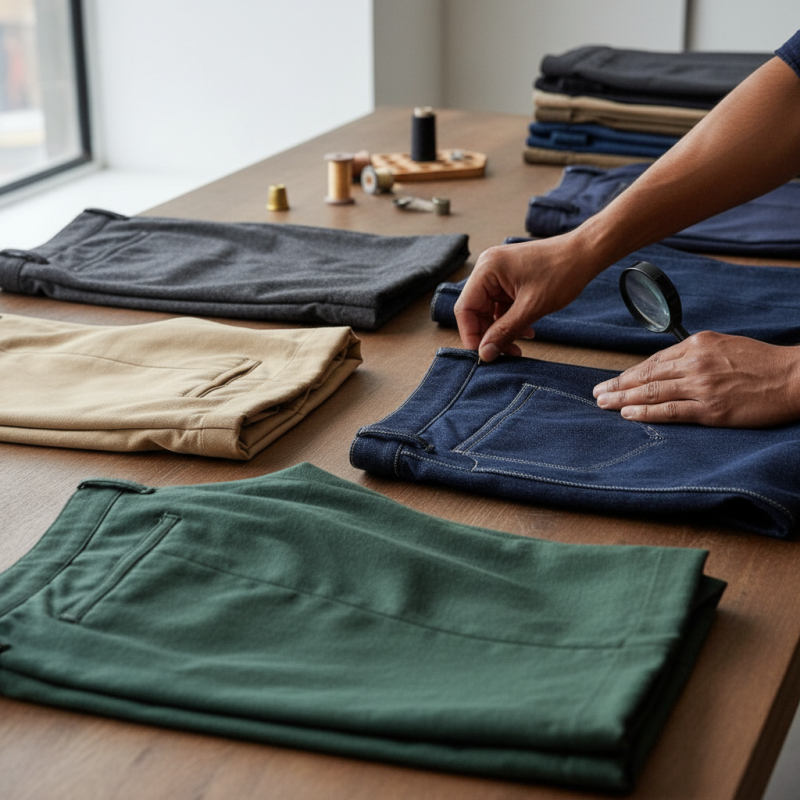
How to Tell if Trousers are High Quality for Global Buyers?

Understanding Fabric Types and Their Quality Indicators

When selecting high-quality trousers, understanding fabric types is essential. Cotton, wool, linen, and synthetic fibers each offer unique characteristics. Cotton, known for its softness, breathability, and comfort, varies in quality based on its origin. Egyptian cotton is often considered superior due to its long fibers. Conversely, blending cotton with synthetic materials can enhance durability but may reduce breathability.

Wool trousers exhibit excellent thermal regulation. Merino wool is soft and less itchy, making it suitable for everyday wear. Look for tightly woven wool, as it tends to be more robust. Linen, on the other hand, is prized for its lightweight and airy texture. However, lower-quality linen can wrinkle easily.

Consider the weight and drape of the fabric. Heavier fabrics generally signal better quality. Check the stitching, too; fine, even stitches indicate attention to detail. A trouser’s lining can also signify quality; fully lined trousers offer better structure. Reflecting on these aspects can guide your purchasing decisions. Don't rush through. Quality is often in the details.

How to Tell if Trousers are High Quality for Global Buyers? - Understanding Fabric Types and Their Quality Indicators

Fabric Type Quality Indicator Breathability Durability Price Range (per yard)
Cotton Natural fiber, soft texture Excellent Moderate $3 - $10
Wool Warm, moisture-wicking Good High $10 - $20
Polyester Synthetic, wrinkle-resistant Moderate Moderate $2 - $8
Linen Lightweight, breathable Excellent Low $8 - $15
Silk Luxurious, soft sheen Moderate High $15 - $30

Evaluating Stitching Techniques for Durability and Strength

When evaluating trousers for quality, stitching techniques play a crucial role. High-quality trousers display even, tight stitching throughout. The length of the stitches matters; shorter stitches typically indicate strength and durability. A well-stitched seam can withstand everyday wear and tear.

Look for double-stitched seams in high-impact areas. This adds extra strength and helps prevent ripping. Pay attention to the threads used. Stronger threads are less likely to fray or break. Inspecting the stitching pattern is essential; it should be consistent without loose threads.

Tips: Check for reinforced stitching at pockets and hems. This shows the manufacturer’s commitment to quality. Don’t overlook the intersection of seams; these should be securely finished. Quality trousers will often feature bar tacks at critical points. Don't shy away from irregularities; they may reveal a handmade touch, offering character to each pair.

Assessing Fit and Tailoring as Markers of Quality

When evaluating trousers, fit and tailoring are crucial indicators of quality. A well-fitted trouser hugs the body in all the right places. Attention to detail in construction reflects craftsmanship. For instance, check the waistline for comfort. It should feel snug but not tight. The rise should also match your body shape. This ensures better movement.

Tailoring makes a significant difference in how trousers sit on the body. Custom alterations can enhance the overall look, especially around the hem and cuffs. Look at the stitching; tight, even stitches indicate durability. Inspect the fabric as well. Natural fibers tend to breathe better, offering comfort over time.

It’s important to reflect on the fit. Sometimes, ready-made options don't cater to all body types. This can lead to frustration when a great style doesn’t feel right. Consider that high quality isn't just about brand names but also how a trouser makes you feel. Investing time in finding the perfect fit is essential for any buyer.

Identifying Reliable Brands and Their Quality Standards

When assessing the quality of trousers, reliable brands stand out. According to a report by the Textile Exchange, about 73% of global consumers consider sustainability in their purchasing decisions. High-quality trousers often showcase sustainable practices. Fabric composition plays a key role in this. Look for a blend of natural and synthetic fibers that enhance durability and comfort.

Not all brands have the same quality standards. Industry experts suggest checking certifications like OEKO-TEX or GOTS for textiles. These certifications ensure that fabrics are tested for harmful substances. Additionally, reputable brands often provide transparency about their supply chains. You can learn more about their production processes by visiting their websites. Brands with an established history tend to maintain higher quality standards.

Inspecting garment details reveals much about quality. Check stitching consistency and seam finishes. A survey by the American Apparel and Footwear Association indicates that nearly 30% of consumers have returned products due to poor craftsmanship. Flaws in stitching can signal a lack of care in production. Paying attention to these aspects ensures a more informed purchasing decision.

Quality Standards of Trousers from Various Categories

Examining Care Labels for Maintenance and Longevity Insights

When assessing the quality of trousers, one often overlooks the importance of care labels. These labels are not just regulatory requirements; they provide insights into maintenance and longevity. A high-quality pair of trousers should have a label that indicates whether they can withstand machine washing or if they require dry cleaning. This can significantly affect how easy they are to care for over time.

**Tip:** Always look for fabric types. Natural fibers like wool or cotton usually indicate durability. Synthetic blends can also be high quality but check the percentage of each material involved.

Another key component is the specific washing instructions. If the label suggests cold water or hand washing, it might reflect a more delicate fabric. High-quality trousers often specify gentle cycles to maintain their shape and color. If the instructions seem overly complicated, consider whether you're willing to invest the time for proper care.

**Tip:** Don’t ignore the ironing details. If the label states “may require ironing” or “wrinkle-resistant,” it means the fabric is designed with maintenance in mind.

Reflecting on these details can enhance your buying experience. High-quality trousers should not only look good but also fit your lifestyle in terms of care.

FAQS

: Why is fit important when choosing trousers?

: A well-fitted trouser hugs the body correctly. It allows for better movement and comfort.

What should I check for in the waistline?

The waistline should feel snug but not tight. A comfortable fit is essential for quality.

How does tailoring affect trousers?

Tailoring enhances how trousers sit on your body. Custom alterations improve the overall look and fit.

What should I look for in the stitching?

Tight, even stitches indicate durability. Flaws can signal poor craftsmanship and affect quality.

How can fabric composition impact trousers?

A blend of natural and synthetic fibers offers both durability and comfort over time. This matters for quality.

How can I verify a brand's quality standards?

Check for certifications like OEKO-TEX or GOTS. These assure that fabrics are safe and tested.

Are brand names an indicator of quality?

Not always. Quality is more about fit and feel than just the brand name.

Why is sustainability important in fabric selection?

Many consumers consider sustainability. High-quality trousers often practice sustainable methods, adding value.

What might lead to disappointment in fit?

Ready-made options can’t cater to all body types. This often results in frustration and returns.

How can I make a better purchasing decision?

Inspect details like stitching and fabric. A careful look can help ensure better quality trousers.

Conclusion

When considering how to tell if trousers are good quality, it is essential to start by understanding the different fabric types and their quality indicators. Fabrics such as cotton, wool, and blends each have unique characteristics that can affect durability and comfort. Next, evaluating stitching techniques is crucial; well-constructed seams and reinforced areas can significantly enhance the trouser's longevity and strength.

Additionally, assessing the fit and tailoring of trousers is a key marker of quality. Well-fitted trousers not only offer comfort but also reflect attention to detail in production. Reliable brands often have established quality standards, making it beneficial to identify them as you shop. Finally, examining care labels can provide insights into maintenance requirements, ensuring the trousers remain in great condition over time. By considering these factors, buyers can make informed decisions when selecting high-quality trousers.

Liam

Liam

Liam is a dedicated marketing professional with a profound expertise in the industry, where he excels at highlighting the unique advantages of our core products. With a keen understanding of market trends and consumer needs, Liam frequently updates our company’s professional blog, providing......