Summer-to-fall dressing is a gradual adjustment, not a reason to replace your wardrobe overnight. The tricky part is unpredictable weather: a sunny afternoon may call for a breathable shirt, while a cool evening needs another layer. Start with what you own. Keep lightweight summer pieces in rotation, then add warmth through texture, coverage, and accessories.
That is the practical answer to how to transition outfits from summer to fall. Pair a cotton dress with a fine-knit cardigan, or wear a linen shirt beneath a light jacket. Swap sandals for loafers or ankle boots when mornings turn chilly. A scarf can add warmth without making an outfit feel heavy. No perfect formula. Some combinations may look awkward at first; try changing one element rather than rebuilding the whole look.
There is a broader reason to make existing clothes work longer. Textile Exchange’s Materials Market Report 2024 estimates that global fiber production reached 124 million tonnes in 2023. The figure does not measure personal wardrobe waste, but it highlights the scale of material use across the industry. Rewearing and restyling are practical habits, not magic solutions. Fashion designer Vivienne Westwood’s advice, “Buy less, choose well, make it last,” fits the seasonal shift particularly well. Choose versatile layers that suit your local weather, and let comfort guide the final outfit. A light jacket that stays unused is not a clever transition piece. Try, adjust, and repeat.
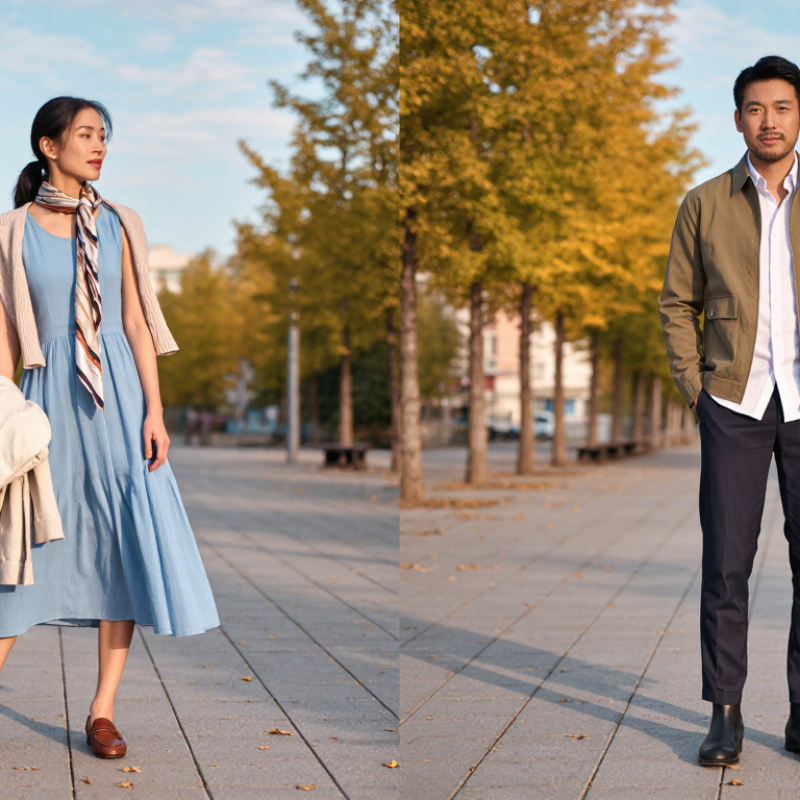
Seasonal changes shape fall clothing needs more than the calendar does. Mornings can feel crisp, while afternoons still carry summer warmth. A light jacket over a breathable shirt handles that swing better than a thick coat. By evening, cooler air may make uncovered arms uncomfortable. It shifts fast. Shorter daylight also means more time walking home or waiting outdoors in dim, chilly conditions.
Rain and wind change the equation. A damp sidewalk, gusty bus stop, or cold office with strong air conditioning can make an outfit feel wrong. Choose fabrics that dry reasonably quickly, and keep a compact layer nearby. Shoes matter, too: thin summer soles may feel cold on wet pavement. I’ve sometimes dressed for the afternoon forecast and regretted ignoring the morning one. Fall is not reliably cold, which makes dressing for it a small daily guess.
Tips: Check the hourly forecast, not just the high temperature. Try a thin base layer, a warm mid-layer, and an outer layer you can remove. Keep socks or a scarf in your bag for sudden chills. If you overheat easily, skip heavy knits until temperatures stay low; one warm-looking outfit can be surprisingly uncomfortable indoors.
| Seasonal factor | What changes in fall | Practical outfit adjustment | Useful clothing choices |
|---|---|---|---|
| Cooler mornings and evenings | Temperatures often vary more between morning, afternoon, and evening. | Add a removable layer over summer basics so you can adjust through the day. | Light cardigan, overshirt, denim jacket, or thin knit over a T-shirt or dress. |
| Shorter daylight hours | There is less daylight as the season progresses, and outdoor temperatures may drop after sunset. | Choose an extra layer for late commutes and evening activities. | Packable jacket, long-sleeved top, or a lightweight scarf. |
| More frequent rain in some regions | Rainfall patterns differ by location, but wet days can make light summer clothing less comfortable. | Check the local forecast and add a water-resistant outer layer when rain is expected. | Rain jacket, compact umbrella, and shoes with suitable traction. |
| Changing comfort needs indoors and outdoors | Heating, air conditioning, wind, and time spent outside can make one outfit feel different throughout the day. | Use breathable layers that are easy to take off or put back on. | Cotton or other breathable base layers with a midweight sweater or jacket. |
| Cooler, windier days | Wind can make mild temperatures feel cooler, especially in exposed areas. | Add a wind-blocking outer layer rather than relying only on a thicker base layer. | Light windbreaker, lined overshirt, or a close-fitting scarf. |
| Transition from summer footwear | Open footwear may offer less protection from cool or wet conditions. | Rotate to closed-toe shoes when the weather or walking conditions call for more coverage. | Sneakers, loafers, or ankle boots suited to local conditions. |
| Seasonal color and outfit versatility | Summer pieces can remain useful, but pairing them with fall layers changes their warmth and overall look. | Reuse lightweight pieces as base layers and combine them with seasonally appropriate textures. | Summer dresses with a knit layer, or lightweight trousers with a long-sleeved top. |
Clothing needs vary by region and daily forecast. Adjust layers to local temperatures, wind, rain, and planned activities.
Keep breathable shirts nearby and add a cardigan or light jacket on cool mornings. No rush.
Try cotton dresses with tights, or linen shirts beneath fine-knit sweaters. Skip pieces that feel sheer or worn.
Wear it on a cool morning, then check how you feel by lunchtime. A forecast cannot tell everything.
Check fabric weight, seams, comfort, and layering potential. Hold thin fabric near a window.
Not necessarily. Test what you own first; warmer socks, a scarf, or a compact umbrella may fill a real gap.
Try a rust, olive, deep blue, or brown scarf beside summer white. It is a small test.
Bend your elbows and move around indoors. If fabric bunches, remove a layer rather than forcing the look.
One report estimated 20–30% lower carbon, water, and waste footprints when garments stayed in use for nine extra months. That is not a personal guarantee.
Notice what you actually reach for on cooler days. I still keep too many “just in case” pieces sometimes.
As temperatures shift, fall brings cooler mornings, shorter days, and changing weather that call for more versatile clothing. A gradual wardrobe transition helps you stay comfortable without putting away every summer item at once. Start by reviewing lightweight tops, dresses, and trousers to see which can still work when paired with warmer layers. Keeping useful summer pieces in rotation also makes it easier to adapt outfits as the weather changes.
Learning how to transition outfits from summer to fall is mostly about thoughtful layering and a few seasonal updates. Add cardigans, jackets, or scarves over breathable basics, and choose fabrics such as denim, knitwear, and cotton blends for extra warmth. Deeper, earthy colors can give familiar outfits a fall feel, while practical accessories help prepare for cool or breezy days. By combining what you already own with a few well-chosen seasonal pieces, you can create comfortable outfits that feel appropriate throughout the transition.

 DAVERA Fashion