For global buyers, the question “are pu leather clothes durable” has no simple yes-or-no answer. Polyurethane leather can look smooth, flexible, and convincing when it leaves the factory. Yet performance changes with coating thickness, fabric backing, stitching, storage, and daily wear. A jacket worn twice monthly may remain attractive for years. A motorcycle-style jacket exposed to rain, heat, and repeated friction can crack much sooner.
Dr. Subramanian Senthilkannan Muthu, a recognized textile sustainability researcher, states, “Material performance depends on construction, use, and care.” This practical observation matters for international purchasing decisions. A dependable supplier should provide coating specifications, abrasion results, seam details, and care instructions. Buyers should also inspect samples under bending, rubbing, and controlled moisture exposure. Small surface splits around pockets often reveal weakness earlier than a showroom inspection.
Look closely.
PU clothing is not automatically poor quality. It is also not automatically long-lasting. Some modern coatings offer better flexibility and hydrolysis resistance, while cheaper versions may peel after prolonged humidity or heat. Storage inside a hot shipping container can accelerate damage before retail display. That possibility deserves attention.
This guide examines durability through materials, manufacturing, climate, maintenance, and consumer use. It also recognizes an uncomfortable limitation: laboratory results cannot perfectly predict every wardrobe. Careful testing reduces uncertainty, but it cannot remove it. Global buyers need evidence, realistic expectations, and honest communication rather than attractive claims alone.
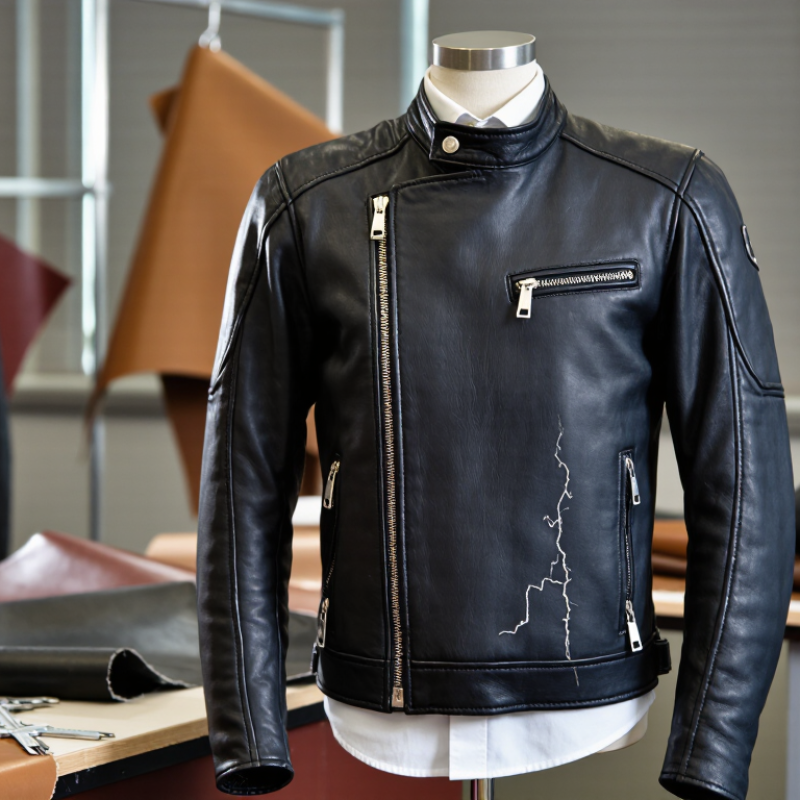
PU leather is a layered material, not a single solid skin. Most garments combine a polyurethane coating with a woven or knitted textile backing. The coating creates the surface, color, and initial resistance to light rain. Its thickness, softness, and bonding quality strongly influence service life. A glossy finish alone proves very little.
The textile backing is equally important. It supports seams, controls stretch, and helps resist tearing during daily movement. Polyester backings often provide stable dimensions, while knitted structures can offer more comfort and flexibility. However, loose or weak fabric may distort around pockets and elbows. Thin coatings can crack after repeated bending, especially in cold weather. Humid, hot storage may also accelerate hydrolysis in some polyurethane systems. No coating is invincible.
For global buyers, durability should be checked through practical specifications, not appearance. Ask for coating thickness, backing composition, abrasion results, flex-crack performance, and seam-strength data. Rub a sample against a rough surface, bend it repeatedly, and inspect the edges after cleaning. These simple checks reveal weaknesses that photographs hide. A laboratory result helps, but it is not a promise for every climate or use pattern. Some suppliers provide impressive figures without explaining test conditions. That deserves a second look. Garments intended for heavy outdoor wear may need stronger backing and better moisture management, while fashion pieces may accept a lighter structure for improved drape.
For global buyers, PU leather durability should begin with test evidence, not surface appearance. Martindale abrasion testing under ISO 12947 repeatedly rubs a specimen against a specified abrasive material. The machine records cycles until visible damage appears.
Cycle counts offer a useful comparison. A fabric reaching 50,000 cycles generally resists rubbing better than one reaching 10,000 cycles. However, the number is not a guaranteed service-life figure. It does not predict years on a vehicle seat, sofa, or garment. Test pressure, abrasive type, moisture, and endpoint definitions can change the result. Ask for the full report, not only the headline number.
For coated PU fabrics, inspectors should check coating cracks, peeling, color loss, and exposure of the backing. A strong result still needs support from flexing, seam, humidity, UV, and cleaning tests. PU can look perfect after abrasion, then weaken after repeated heat and moisture. That part is easy to miss. Buyers should compare samples tested under identical conditions and inspect them after production, not only before approval. One practical weakness remains: laboratory rubbing cannot recreate every movement, spill, or washing routine. Treat Martindale data as evidence, not a promise.
PU leather clothing can look smooth and strong during a showroom inspection. Humid storage may tell a different story. Moisture can slowly break down polyurethane layers, causing stickiness, peeling, bubbles, or fine surface cracks. ISO 1419 offers accelerated ageing procedures for coated fabrics under controlled heat and humidity. It helps laboratories compare samples and identify hydrolysis risk before shipment. The test is useful, but it is not a crystal ball. Actual results also depend on fabric structure, coating thickness, dyes, stitching, and storage conditions.
A reliable evaluation should test several pieces from different production batches. Technicians record the original appearance, expose specimens to the specified ageing environment, and inspect them afterward. Magnified checking can reveal hairline cracks that normal viewing misses. Controlled flexing is also valuable because a coating may look acceptable until it bends. Buyers should request test conditions, exposure time, sample size, and failure criteria. A report without these details is difficult to trust. Some garments pass laboratory ageing yet fail after repeated wet storage. That gap deserves honest discussion.
Tips: Ask for ISO 1419 results from recent production. Compare aged and unaged samples under bright light. Rub and flex the material gently. Check lining, seams, and folded edges. Keep a retained sample for later comparison.
PU leather garments can look smooth on a sample rack, yet durability depends on more than thickness. Textile Exchange’s Materials Market Report 2024 recorded about 124 million tonnes of global fiber production in 2023. Polyester represented roughly 57 percent. This scale makes synthetic garment testing commercially important, especially for exporters managing repeated wear and washing.
ISO 7854 evaluates flex cracking in coated fabrics. A laboratory bends the material repeatedly, then checks for visible cracks under controlled conditions. Cracks often begin near sleeve folds, pocket corners, and seam allowances. ISO 2411 measures coating adhesion, commonly called peel strength. It shows how firmly the PU layer stays attached to the textile base. Strong peel results cannot guarantee good flex performance. The failures are different.
There is no universal ISO pass mark for every PU garment. Buyers should request the test method, conditioning details, specimen direction, and cycle count. A report stating only “passed” is incomplete. In practical audits, I would compare dry and humid-conditioned samples before approving production. Humidity can expose weak bonding. Some factories test only flat panels, which may hide damage at stitched areas. That is a limitation worth challenging. Data from ISO-based reports becomes useful only when the sample represents the finished garment, not an ideal laboratory sheet.
Are PU Leather Clothes Durable for Global Buyers?
Durability depends on care, climate, construction, and honest testing. In sample inspections, I check coating adhesion, seam strength, colorfastness, and abrasion resistance. A jacket may look flawless on delivery, yet crack after repeated folding. Ask for the material composition and production date. Check whether the surface uses a stable backing fabric. Small details matter.
Climate changes the risk. Tropical humidity can encourage hydrolysis, especially during long storage. Dry, cold air may make the coating feel stiff. Strong sunlight can fade darker colors near shop windows. Buyers should request care instructions for their destination market. Wipe the garment with a soft, damp cloth. Avoid solvents, heaters, and sealed plastic bags. Allow airflow after wear. Simple care helps, but it cannot repair weak coating chemistry.
Warranty terms need careful reading. Confirm coverage length, peeling definitions, storage conditions, and claim evidence. Ask who pays return shipping. Request recent, third-party test reports with laboratory details, test methods, sample identification, and test dates. A single report does not prove every production batch. That is a common weakness. Compare results with your own inspection samples. I would also test bending, rubbing, and humidity exposure before placing a large order. No checklist removes uncertainty. It only makes hidden risk easier to question.
| Evaluation Dimension | Useful Data or Practical Benchmark | Why It Matters for PU Leather Clothing | Buyer Verification Checklist |
|---|---|---|---|
| Material Construction | Most PU leather garments consist of a textile backing plus a polyurethane surface coating. Coating thickness, backing strength, seam construction, and finish quality vary by product. | Surface cracking, peeling, and seam failure are influenced by the complete laminate structure, not only by the appearance of the outer coating. | Request the material specification, coating type, backing composition, coating thickness or mass, and a close-up photo of the cut edge. |
| Expected Service Life | No universal service-life period exists. | Actual durability depends on wear frequency, flexing, heat, humidity, sweat, storage, cleaning, and the quality of the polyurethane formulation. | Do not accept a fixed “lifetime” claim without test conditions. Compare test results with the intended use and destination climate. |
| Abrasion Resistance | Martindale abrasion testing is commonly reported under ISO 12947-2 for textile materials. Results must include the applied load, endpoint, and whether the result is for fabric, coating, or finished garment. | Repeated rubbing from seating, bags, vehicle interiors, and arm movement can wear through the surface coating. | Ask for the complete abrasion report, including test method, load, cycles, specimen construction, failure definition, laboratory, and test date. |
| Flex-Crack Resistance | Flexing tests may be conducted using methods such as ISO 5402-1 for leather or another clearly stated coated-fabric method. Results are meaningful only when the method is suitable for the product. | Low-temperature or repeated bending can create visible cracks, especially at elbows, shoulders, waistbands, and pocket openings. | Request flexing results at both standard laboratory temperature and the lowest temperature relevant to the target market. |
| Hydrolysis Resistance | Hydrolysis risk is higher in warm, humid conditions. | Moisture and heat can break down susceptible polyurethane coatings, causing tackiness, odor, bubbling, or peeling during storage or use. | Ask whether hydrolysis resistance was tested using an applicable accelerated-aging method, such as ISO 1419 or another documented method, and request the exposure conditions and post-test inspection results. |
| Heat and Humidity Exposure | Accelerated aging reports should state temperature, relative humidity, exposure duration, specimen preparation, and acceptance criteria. | A garment that performs well in a cool, dry market may deteriorate faster in tropical or monsoon climates. | Match the test environment to the destination. Treat a report without temperature, humidity, duration, or visual grading as incomplete evidence. |
| Cold-Climate Performance | Polyurethane-coated materials can become less flexible at low temperatures, depending on formulation and construction. | Cold-weather folding, bending, and shipment can increase the chance of cracking or permanent creasing. | Request conditioning and flexing results at the lowest expected transport and use temperature, particularly for winter apparel. |
| Colour Fastness to Rubbing | ISO 105-X12 is commonly used to evaluate colour fastness to rubbing. Results are generally reported on a grey-scale rating from 1 to 5, where higher ratings indicate better fastness. | Dark PU coatings may transfer colour onto light clothing, furniture, car seats, or bags when rubbed under dry or wet conditions. | Request separate dry-rubbing and wet-rubbing results, including the rating, fabric colour, specimen condition, and test laboratory. |
| Colour Fastness to Water and Perspiration | ISO 105-E01 addresses colour fastness to water, while ISO 105-E04 addresses colour fastness to perspiration. Test ratings should identify the staining and colour-change results. | Sweat, rain, and damp storage can cause staining, colour migration, or changes in surface appearance. | Review acidic and alkaline perspiration results when the garment will be worn next to the skin or in hot climates. |
| Water Repellency | Water repellency is not the same as waterproofness. Spray-rating methods such as ISO 4920 evaluate surface wetting, while seam construction and material permeability affect rain protection. | A PU surface may resist light splashes but still allow water entry through seams, needle holes, zippers, or damaged coating. | Confirm the intended claim: splash-resistant, water-repellent, or waterproof. Ask for the relevant test method and seam or zipper assessment. |
| Tensile and Tear Strength | Applicable textile or coated-fabric methods may include ISO 13934-1 for tensile properties and ISO 13937-2 for tear strength, where suitable for the construction. | Strength affects resistance to pulling at sleeves, pockets, closures, seams, and areas stressed during dressing. | Request results for the finished material in both machine and cross directions, plus seam-strength results for high-stress areas. |
| Seam and Closure Durability | Surface material testing alone does not prove garment durability. Zippers, snaps, stitching density, seam allowance, and reinforcement should be assessed separately. | Many failures occur at seams and closures before the main PU surface visibly deteriorates. | Inspect pocket corners, armholes, waistband joins, zipper ends, and snap attachment points. Request repeated-opening or seam-strength data when available. |
| Care Instructions | Use the sewn-in care label as the controlling instruction. | High heat, solvent cleaning, aggressive detergents, prolonged soaking, and tumble drying can damage polyurethane coatings. | Confirm whether the garment requires wiping, hand washing, low-temperature washing, professional cleaning, air drying, or storage away from heat and direct sunlight. |
| Cleaning Compatibility | Cleaning performance should be verified on the actual finished garment because dyes, adhesives, coatings, trims, and lining materials may react differently. | Incorrect cleaning can cause delamination, gloss changes, colour transfer, stiffness, or surface stickiness. | Ask for a written cleaning procedure and a finished-garment cleaning test. Do not rely only on a test performed on an unsewn material swatch. |
| Storage and Packaging | Store garments clean, dry, ventilated, and away from direct sunlight and excessive heat. Avoid prolonged compression or contact with incompatible plastic packaging. | Heat, humidity, poor ventilation, and pressure can accelerate coating degradation before the product reaches the consumer. | Specify maximum storage temperature and humidity, carton ventilation, interleaving materials, packing duration, and container or warehouse conditions. |
| Climate Suitability | Warm-humid markets require stronger hydrolysis and aging evidence; cold markets require low-temperature flexibility evidence; high-UV markets require colour and finish stability checks. | Climate is a major variable in transport, warehousing, retail display, and end use. | Classify the destination as cool-dry, hot-dry, warm-humid, high-rainfall, or high-UV, then select tests that represent that environment. |
| Warranty Scope | A warranty is a commercial commitment, not a substitute for laboratory evidence. | Warranty exclusions may cover normal wear, incorrect cleaning, storage damage, chemical exposure, or climate-related deterioration. | Obtain the warranty period, start date, covered defects, claim evidence, remedy, response time, exclusions, and responsibility for transport or inspection costs. |
| Verified Test Report | A credible report should identify the material or garment, sample code, sampling date, test methods, conditioning, results, laboratory, authorization, and report number. | Generic certificates or screenshots may not relate to the supplied production lot or the exact PU garment being purchased. | Check that the report matches the exact article, colour, construction, and production batch. Where risk is high, use an independent laboratory or third-party inspection. |
| Production Consistency | Bulk production can differ from a development sample because of changes in coating batch, backing fabric, colour, finishing, or processing conditions. | Durability claims are only useful when the tested sample represents the goods shipped to buyers. | Request pre-production approval, batch traceability, retained samples, random inspections, and a re-test plan after material or process changes. |
| Overall Buying Decision | PU leather can be suitable for fashion garments when climate, care, construction, and verified performance data are aligned. | Durability is a system outcome. No single abrasion, waterproofing, or warranty figure can predict every use condition. | Approve only when the care label is practical for the market, climate risks are tested, reports are traceable, and warranty terms are written and enforceable. |
It bends coated fabric repeatedly under controlled laboratory conditions. The tester then checks for visible cracks. Damage often starts near sleeve folds, pocket corners, and seam allowances.
It measures how firmly the coating stays attached to the textile backing. Strong adhesion is useful. However, it does not guarantee resistance to repeated bending.
Yes. Flex cracking and coating adhesion measure different weaknesses. A coating may bond strongly but crack during repeated folding. That possibility deserves attention.
Request the test method, conditioning details, specimen direction, and cycle count. The report should identify the sample and test date. A simple “passed” statement is incomplete.
Flat panels may hide damage near stitching and curved areas. Finished garments show real folds, seam pressure, and pocket movement. This is more realistic. I would still question limited sampling.
Tropical humidity may encourage hydrolysis during long storage. It can also reveal weak bonding between the coating and backing fabric. Compare dry and humid-conditioned samples before approval.
Wipe the surface with a soft, damp cloth. Avoid solvents, direct heaters, and sealed plastic bags. Let the garment breathe after wear. Care cannot repair weak coating chemistry.
Check the coverage period, peeling definition, storage conditions, and claim evidence. Confirm who pays return shipping. One report cannot prove every production batch. That remains a common weakness.
Are pu leather clothes durable? Their durability depends largely on the quality of the PU coating, the strength and stability of the textile backing, and how well these layers bond together. A balanced structure can resist everyday friction, while weak coatings or poor adhesion may lead to peeling, cracking, or surface wear. Martindale abrasion results under ISO 12947 provide useful cycle-count data for comparing resistance to repeated rubbing, although performance should also be judged against the garment’s intended use.
For buyers in humid or demanding markets, hydrolysis testing under ISO 1419 can help predict whether the material may become sticky, brittle, or cracked over time. Flex-crack testing evaluates repeated bending, while peel-strength testing measures how securely the coating remains attached to its backing. Before purchasing, global buyers should review verified test reports, care instructions, climate suitability, warranty terms, and expected service conditions. These factors offer a more reliable durability assessment than appearance or price alone.

DAVERA Fashion