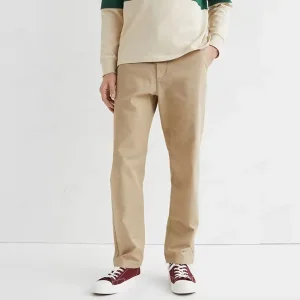
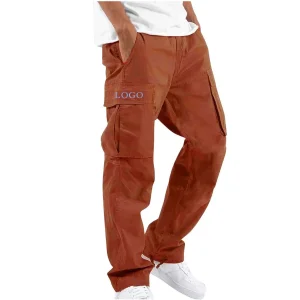
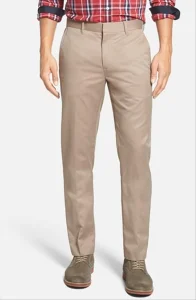
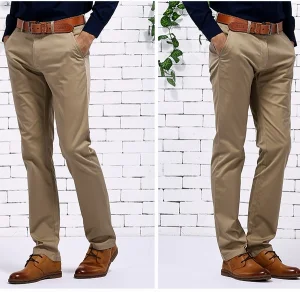
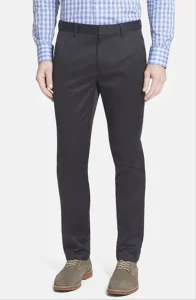
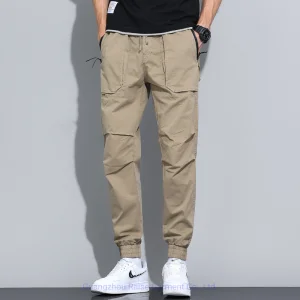
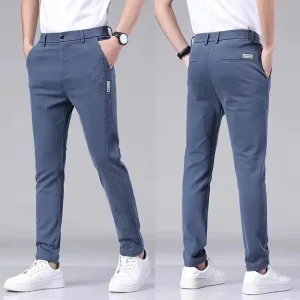
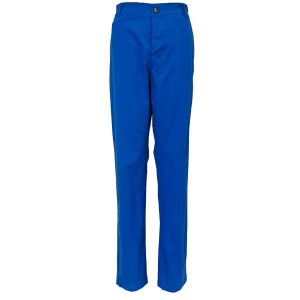
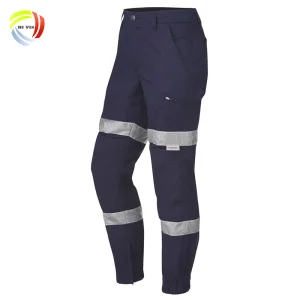
Tailored industrial and executive trousers featuring enhanced breathability, heavy-duty stitching, and custom branding fits designed for Kinshasa, Lubumbashi, and Kolwezi buyers.
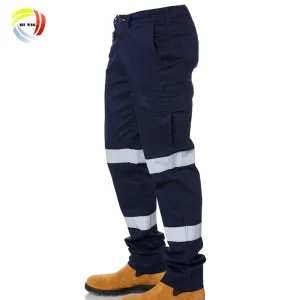
The Democratic Republic of the Congo (DRC) is navigating an era of unprecedented industrialization and corporate refinement. Across administrative hubs like Gombe in Kinshasa and major resource extraction hubs throughout Lualaba and Haut-Katanga provinces, the demand for durable, professional, and climate-resilient apparel has skyrocketed. Local mining enterprises, multinational logistics operators, infrastructure firms, and growing retail networks require textiles that withstand demanding daily wear while prioritizing comfort.
Standard casual trousers fail to meet the performance criteria demanded by the Congolese climate and work environments. This is why high-grammage Cotton Chinos and reinforced Twill Utility Pants have become the primary choice for corporate and field operations. They bridge the gap between heavy-duty personal protective equipment (PPE) and polished corporate identity.
As a leading global apparel manufacturer, Dongguan DAVERA Fashion Co., Ltd. leverages a highly optimized supply chain based in Dongguan, China. We supply high-end, tailored chino pants engineered specifically for the distinct requirements of the DR Congo market, meeting the exact needs of corporate purchasers, wholesalers, and industrial contractors.
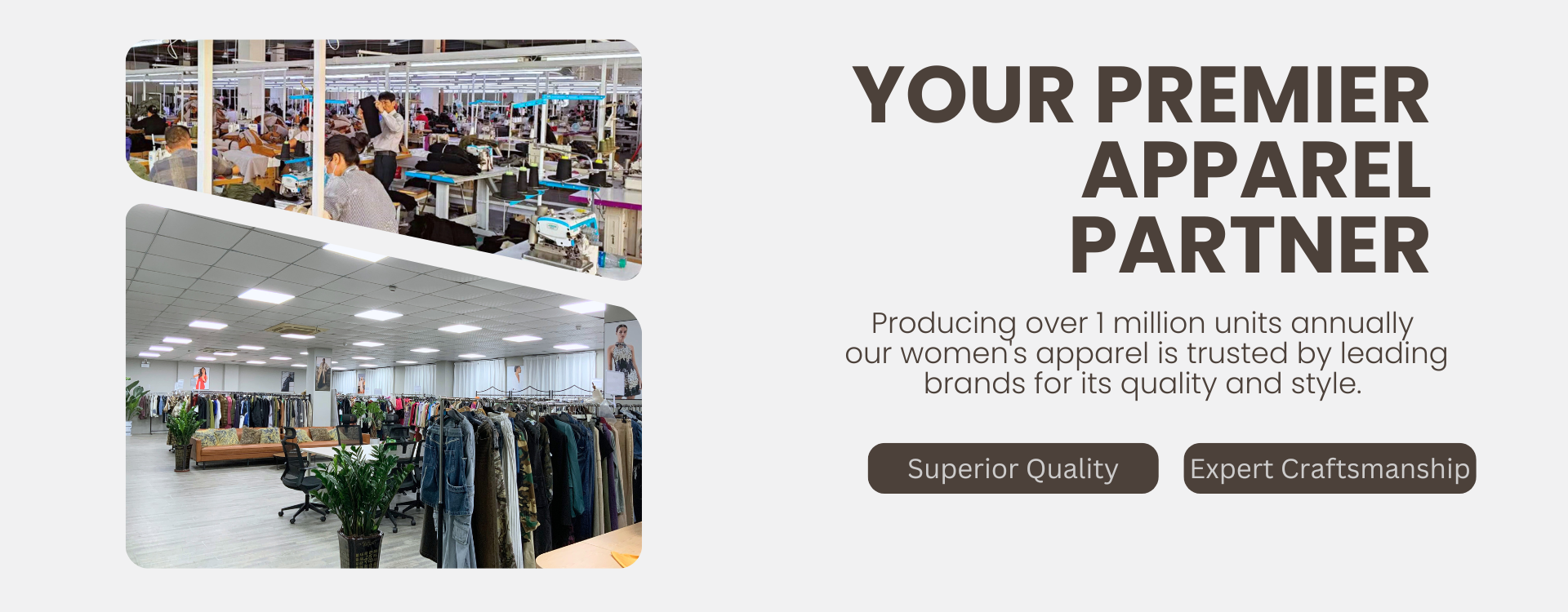
How Dongguan DAVERA Fashion Co., Ltd. guarantees quality consistency, cost control, and rapid volume shipping to Sub-Saharan Africa.
Operating from the global manufacturing cluster of Dongguan, China, we combine advanced digital design (CAD/CAM layout planning), automated high-precision cutting machines, and specialized double-needle lockstitch machines. This ensures every pair of chino pants displays flawless seams, uniform fit alignments, and reinforced stress points (crotches, pockets, and belt loops).
Our facility integrates development, production, and sales. For DRC buyers, this vertical integration eliminates intermediate commission costs, provides full control over custom color dyeing (compliant with corporate brand guidelines), and allows flexible minimum order quantities (MOQs) for specialized projects.
Key Manufacturing Strengths:
All textiles undergo strict tensile, color-fastness, and shrinkage testing to guarantee compliance with international import guidelines.
We deploy moisture-wicking and oil-repellent textile finishes to ensure chinos hold up in high-humidity tropical climates.
Streamlined logistics routes targeting DRC ports, including maritime cargo to Matadi Port and multimodal transshipment via Dar es Salaam.
A deep breakdown of the textile selections best suited for the geographical and weather realities of the Congo Basin.
The Democratic Republic of the Congo spans two major climate zones: the equatorial rain-forest climate of the central basin (characterized by high year-round temperatures and intense humidity) and the tropical wet-and-dry climate of the southern regions (including Lubumbashi and the Katanga plateau).
Standard fast-fashion chino pants constructed from low-grade synthetic fibers trap heat and break down under friction. DAVERA's heavy-duty twill trousers solve this by implementing customized material blends tailored to local conditions:
| Fabric Type | Composition Ratio | Weight (GSM) | Key Strengths for DRC | Ideal Application Scenario |
|---|---|---|---|---|
| Premium Combed Cotton Twill | 100% Cotton | 260g - 300g | Maximum breathability, hypoallergenic, durable weave structures. | Executive offices, corporate uniform programs in Kinshasa. |
| Stretch Satin-Weave Chino | 97% Combed Cotton, 3% Spandex | 240g - 280g | High stretch recovery, wrinkle resistance, exceptional mobility. | Management, site inspectors, and retail management. |
| Polyester-Cotton Ripstop Chino | 65% Cotton, 35% Polyester | 280g - 320g | Ultra-high tear strength, abrasion resistance, quick-drying. | Mining logistics crews, field surveyors, security teams. |
| Lightweight Summer Chino Twill | 100% Cotton (Fine Yarn) | 200g - 220g | Lightweight feel, fast moisture dissipation. | Outdoor marketing teams and regions with high heat levels. |
Our fabrics conform to the strict criteria of Oeko-Tex Standard 100. This guarantees that all dyes used on our cotton fabrics are free from harmful heavy metals and azo-compounds, providing safety in humid environments where sweat-induced skin absorption is a risk factor.
Moving forward, commercial textile purchasing in Central Africa is shifting toward sustainability and smart performance. DAVERA's technical roadmap includes the integration of recycled polyester fibers sourced from clean consumer streams and dyed using water-saving methods. Furthermore, we are developing nano-engineered anti-microbial treatments that inhibit bacterial growth on uniforms worn for extended shifts. This reduces washing frequency and extends the service life of industrial garments.
Ensuring hassle-free shipping through verified import frameworks and strategic trade routes.
Navigating customs declarations and port logistics in Central Africa requires specialized knowledge. Dongguan DAVERA Fashion Co., Ltd. supports importers throughout the documentation and certification cycles, reducing import risks.
Every cargo container shipped to the DR Congo must comply with local compliance requirements. To facilitate customs clearance at the Port of Matadi or the border crossings of Katanga, we coordinate pre-shipment inspections and secure the required certificates of conformity.
By working with certified inspection agencies (such as SGS, Bureau Veritas, or Cotecna), we verify that all garment shipments match their invoice descriptions, structural counts, and safety specifications prior to departure from Chinese ports.
Our quality verification processes check every stage of the manufacturing cycle:
| Seam Strength Test | > 250 Newtons |
| Color Fastness (Washing) | Grade 4-5 (ISO Standard) |
| Shrinkage Tolerance | < 3% (warp & weft) |
| Hardware Cycle Life (Zippers) | 10,000+ open/close cycles |
Review our full range of chino pants, tailored from standard slim fit designs to heavy duty utility models, ready for wholesale export.
Answers to common questions regarding customs, materials, customization options, and lead times for importing to the Democratic Republic of the Congo.
 DAVERA Fashion